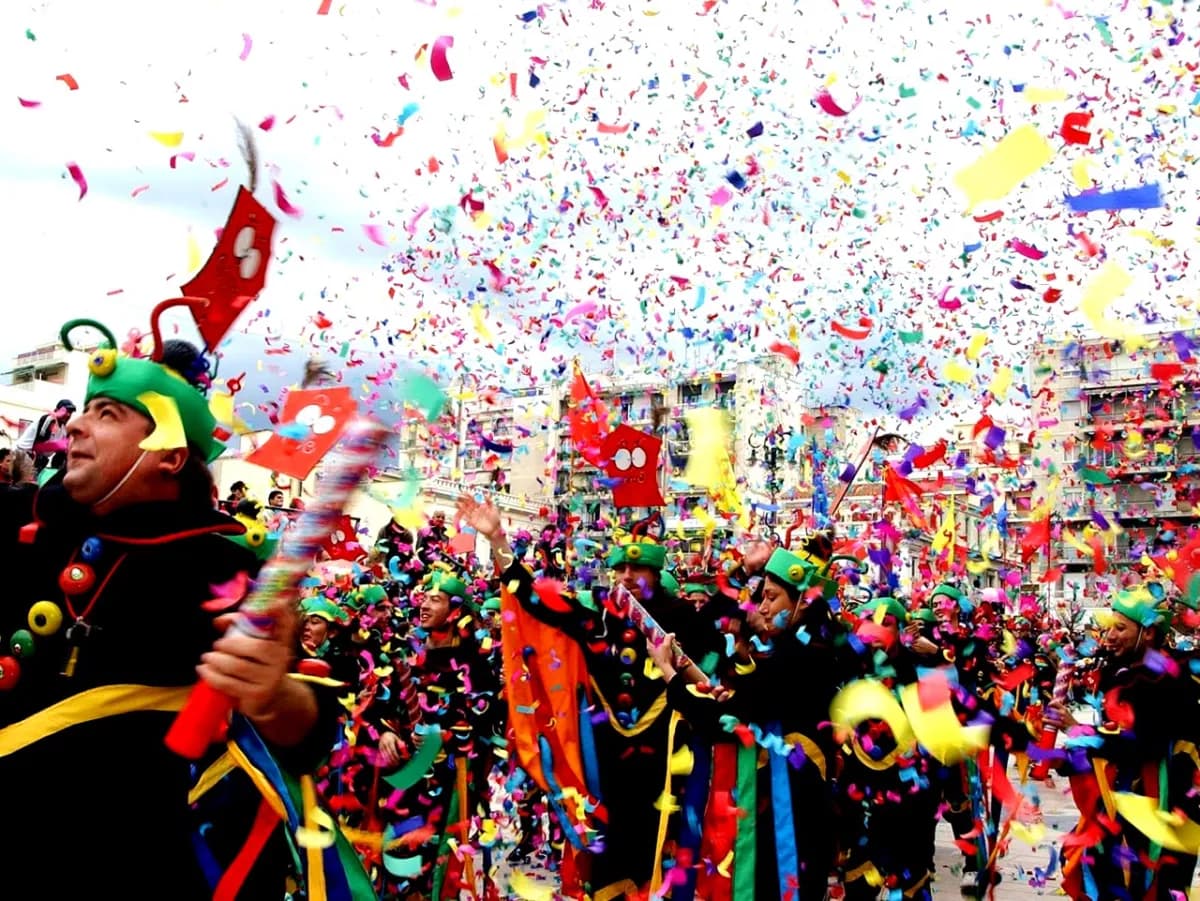
Greeks love festivals, and the twenty days before Sarakosti (Lent) are among the most joyful and exuberant of the year. This is Apokries (from the Greek word apokreas, meaning "from meat"), the carnival season of costumes, parades, grilled meat, and revelry for all ages. It is the time of eating and celebration before the forty days of Lenten fasting that lead up to Easter, and it transforms the entire country into one enormous party.1
Tsiknopempti: The Festival of Grilled Meat
The carnival season builds to several key moments, and one of the most beloved is Tsiknopempti, or "Meat-Sizzling Thursday." The name comes from tsikna, the intoxicating, mouth-watering smoke that wafts from meat on the grill, and Pempti, meaning Thursday. For the observant, this is traditionally the last day to eat meat before Easter arrives weeks later.2
On Tsiknopempti, the entire country fires up the grill. Families gather at home, friends pack into tavernas, and the aroma of sizzling lamb chops, pork souvlaki, and beef patties fills every neighborhood. Even on cold winter days, Greeks bundle up and head outdoors to celebrate. The atmosphere is infectious: people don carnival costumes, music fills the air, and the warmth of the grill becomes the center of community life.
The week following Tsiknopempti is known as Cheese Week (Tyrini), when the devout enjoy their final dairy products before the strict vegan Lenten fast begins. Cheese pies, saganaki, and creamy pastries take center stage, making this week a last indulgence before the season of restraint.
Patra: Greece's Carnival Capital
The biggest and most spectacular carnival celebrations take place in Patra, Greece's third-largest city on the western coast of the Peloponnese. Patra's carnival is always televised nationally, and for good reason. The grand parade features enormous, elaborately designed floats, hundreds of costumed dancers and performers, live musicians, and tens of thousands of masked revelers lining the streets. The city's deep Venetian heritage shines through in the pageantry and theatrical flair of the event.3
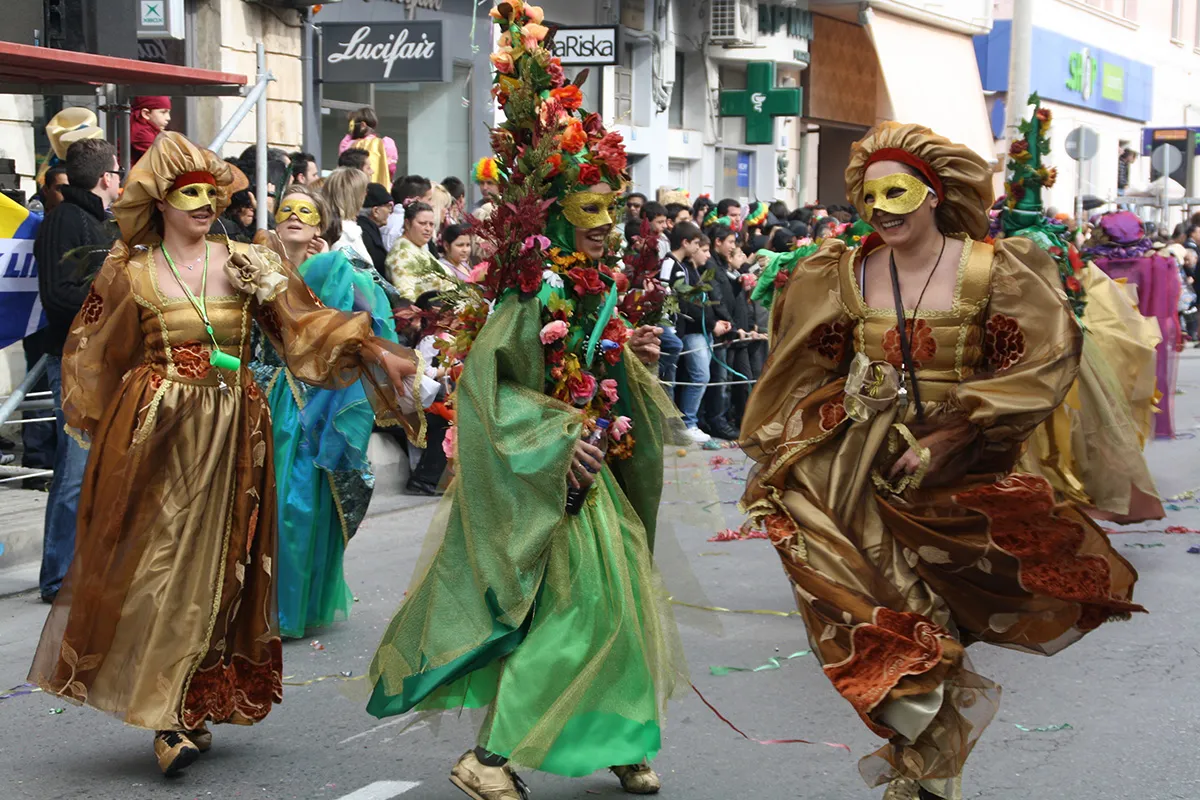
The celebrations in Patra extend well beyond the main parade. For weeks leading up to the grand finale, the city hosts treasure hunts, costume balls, children's events, and open-air concerts. The atmosphere is electric, and visitors from across Greece and Europe descend on the city for what many consider the best carnival celebration in southeastern Europe.
Athens: Carnival in the Capital
In Athens, the downtown neighborhoods of Plaka and Psiri become carnival epicenters. During the final two weekends of the season, thousands of costumed revelers flood the narrow streets. Clubs, bars, restaurants, and discos are packed to capacity. Confetti rains constantly, and visitors should be prepared to dodge the plastic clubs that have become a carnival tradition. These harmless toy bats, thought to be a playful remnant of the phallus cult from the ancient Dionysian festivals of Athens, are used to bop fellow revelers on the head in good-natured fun.4
Athens also hosts its own carnival parade in the neighborhood of Moschato, where streets are closed to traffic and transformed into a river of color and music. While smaller than Patra's procession, the Athens parade has its own charm and draws enthusiastic local crowds.
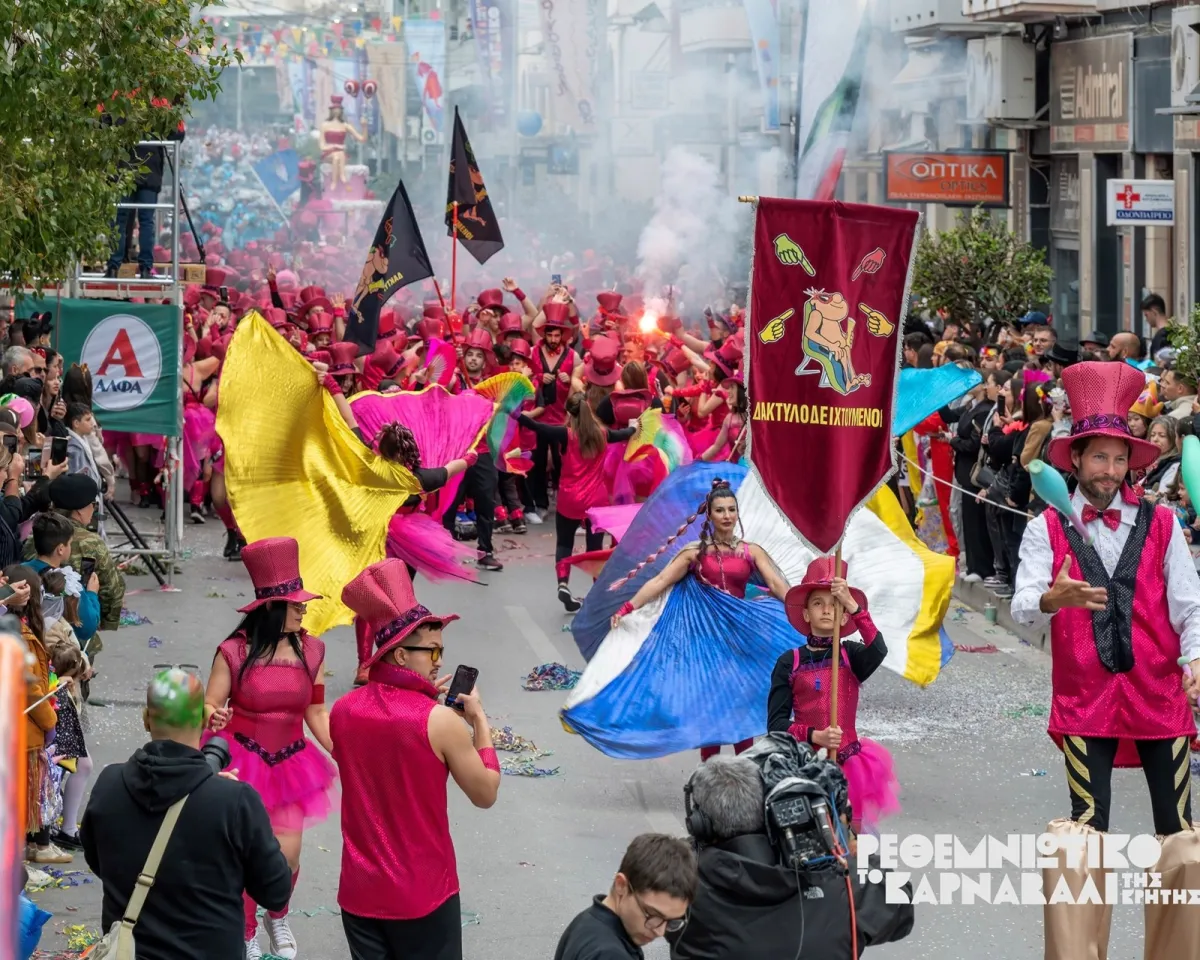
Tyrnavos: Ancient Dionysian Traditions
For something truly unique, the town of Tyrnavos in Thessaly, near Larissa, preserves some of the oldest and most remarkable carnival customs in Greece. Tyrnavos is famous for maintaining ancient Dionysian festival traditions that celebrate spring and fertility in ways that directly echo the rituals of antiquity. The celebrations feature traditional songs, processions, and customs that would be instantly recognizable to an ancient Greek as honoring Dionysus.5
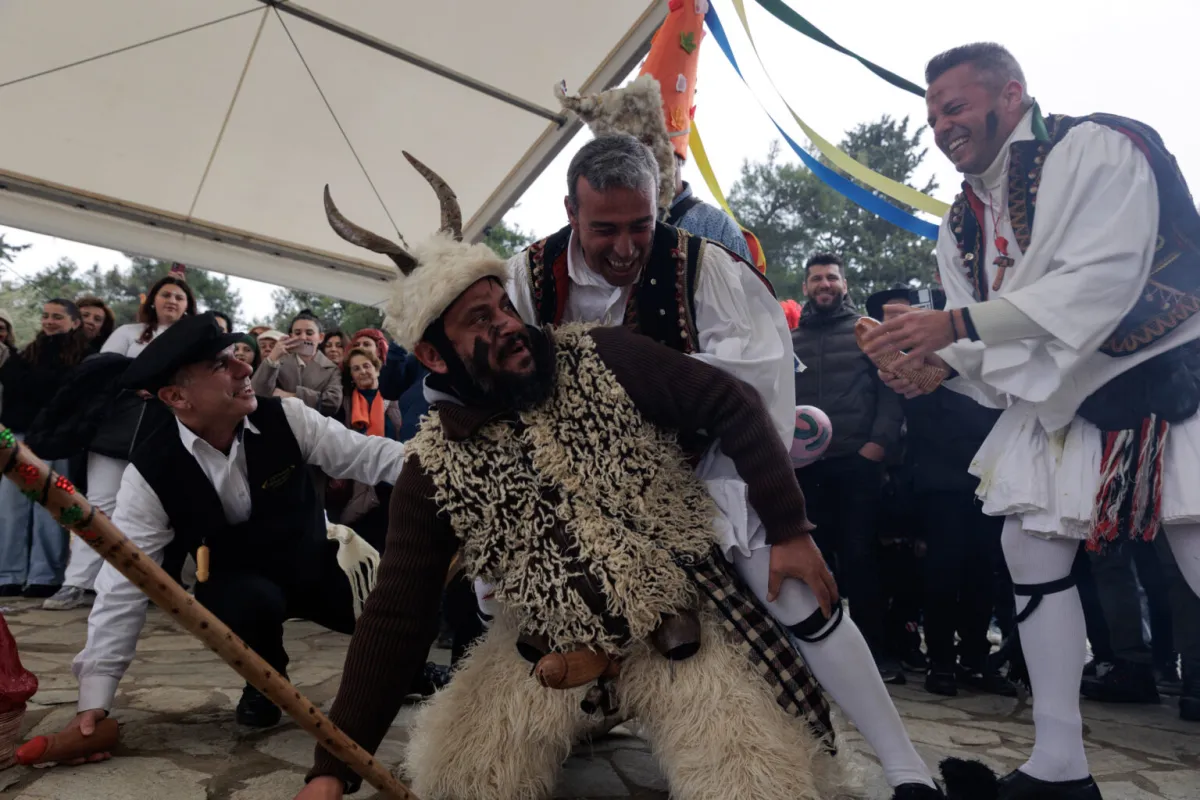
Tyrnavos is also renowned for producing tsipouro, a strong clear spirit distilled from the grape sediment left after wine pressing. During carnival, the tsipouro flows freely, adding warmth and merriment to the ancient festivities. The combination of pre-Christian ritual and Greek conviviality makes Tyrnavos one of the most fascinating carnival destinations in the country.
Island and Regional Celebrations
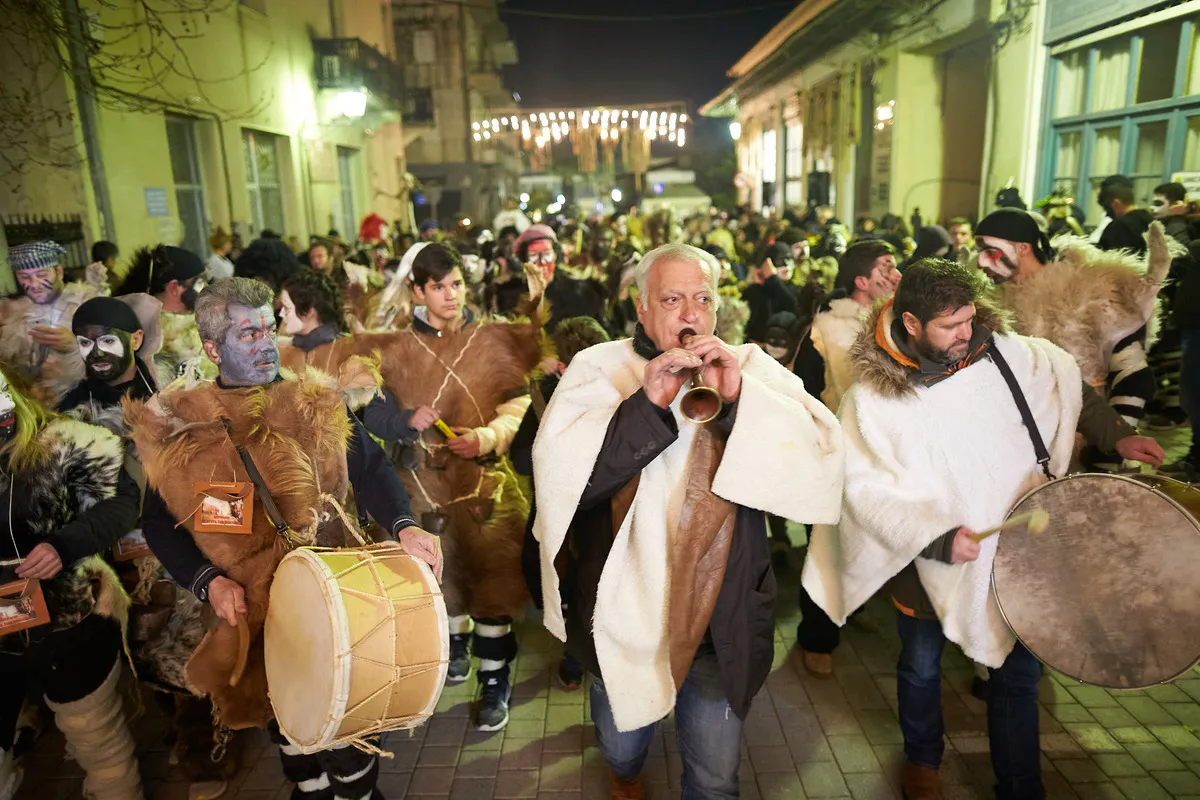
Carnival celebrations extend across the entire country, each region adding its own distinctive character. On the island of Skyros, participants dress in elaborate goat-skin costumes covered with dozens of heavy bells, parading through the streets in a tradition dating back centuries. The spectacle is both haunting and joyful, connecting the modern celebration to deep pastoral roots.6
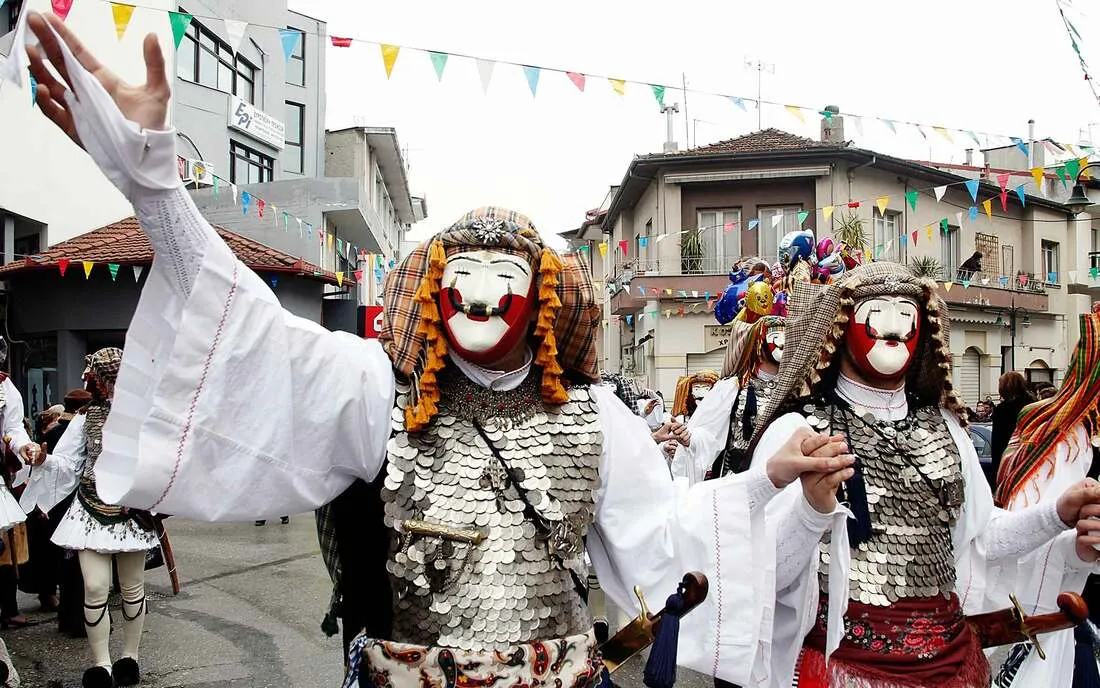
Rethymno in Crete hosts one of the largest island carnival celebrations, with parades, live music, and costume competitions drawing visitors from across the island. Xanthi in northern Greece is known for its vibrant carnival festivities as well, reflecting the region's unique cultural blend. In fact, almost every town and village in Greece has its own carnival customs, from small local costume parties to elaborate municipal celebrations.
From Carnival to Clean Monday
The carnival season culminates on its final Sunday with the biggest parades and celebrations. The very next day, Kathara Deftera (Clean Monday), marks the first day of Lent. In a beautiful contrast to the meat-fueled excess of the preceding weeks, Clean Monday is celebrated with a magnificent vegan feast. Families head outdoors to fly kites, enjoy lagana (a special flatbread baked only on this day), taramosalata, pickled vegetables, halva, and an array of fresh seafood. It is a joyful, communal day that transforms the end of revelry into a celebration of its own.7
The rhythm from carnival excess to Lenten discipline, from grilled meat to vegan feasting, from costumes to kite-flying, captures something essential about Greek culture: the ability to celebrate every season with equal enthusiasm and warmth. Whether you visit during the confetti-filled streets of carnival or the wholesome outdoor gatherings of Clean Monday, you will find a Greece at its most authentically joyful.
References
- Greek Carnival Traditions — Discover Greece
- Tsiknopempti: Greece's BBQ Thursday — Greek Reporter
- Patras Carnival — Carnival of Patras Official
- Athens Carnival Celebrations — Athens Guide
- Tyrnavos Carnival and Dionysian Traditions — Visit Greece
- Skyros Carnival Goat Dance — Greeka
- Clean Monday Traditions — Discover Greece