Ask any Greek where to find the country's best food, and you'll likely hear the same answer: Thessaloniki. Greece's second-largest city, nestled along the Thermaic Gulf in the north, has earned its reputation as the nation's culinary capital through centuries of cultural exchange, a fierce local pride in traditional recipes, and a modern dining scene that rivals any European city. After decades of bringing travelers to this remarkable city, I can confirm that Thessaloniki delivers on its gastronomic promise—and then some.1
A City Shaped by Many Cultures
To understand Thessaloniki's food, you must first understand its history. Founded in 315 BCE by King Cassander of Macedon, who named it for his wife (Alexander the Great's half-sister), the city has been shaped by an extraordinary succession of cultures. Romans, Byzantines, Ottomans, Sephardic Jews expelled from Spain, refugees from Asia Minor—each group left its mark on the local cuisine.2
The Byzantine period established Thessaloniki as a major religious and commercial center, and Byzantine influences persist in the city's approach to ceremonial foods and religious feast preparations. The Ottoman centuries, lasting nearly five hundred years, introduced the coffee culture, the concept of the meze spread, and countless spice combinations still used today. The Sephardic Jewish community, which once comprised over half the city's population, contributed their own culinary traditions, many of which survive in local bakeries and homes.3
Perhaps most significantly, the 1923 population exchange between Greece and Turkey brought over 100,000 refugees from Asia Minor to Thessaloniki. These refugees, particularly those from Constantinople and Smyrna, brought sophisticated culinary traditions that transformed the city's food culture. Dishes like soutzoukakia (spiced meatballs in tomato sauce), polytelikó (a rich meat stew), and countless pastries trace directly to these communities.
Modiano Market: The City's Culinary Heart
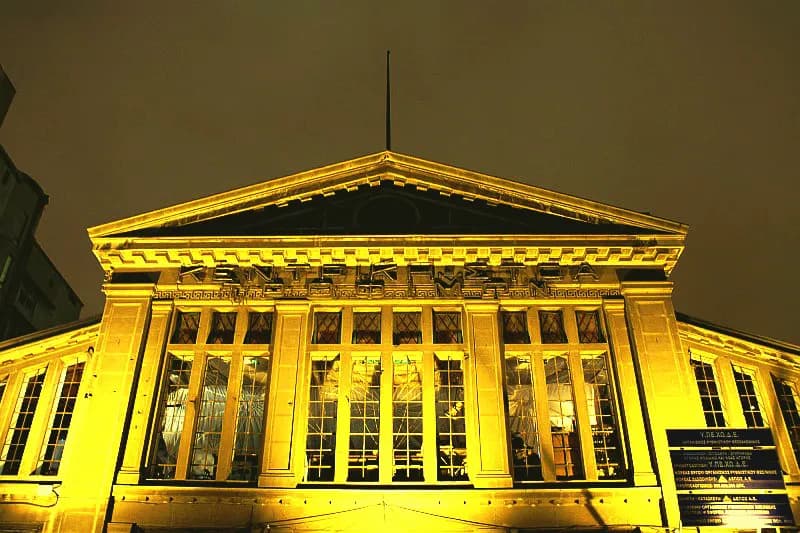
No exploration of Thessaloniki's food scene can begin anywhere but Modiano Market. This historic covered market, named for the Jewish architect Eli Modiano who designed it in the 1920s, recently underwent extensive renovation and has emerged as one of Greece's most exciting food destinations.4
The market's ground floor maintains its traditional character. Fishmongers display the morning's catch from the Aegean, their stalls gleaming with sardines, red mullet, sea bream, and octopus. Butchers offer cuts familiar and unfamiliar to foreign visitors—Greek lamb is exceptional, and the offal selection speaks to the country's nose-to-tail traditions. Cheese vendors proffer samples of local graviera, aged kasseri, and the tangy, crumbly anthotiro. Olive merchants sell varieties from across northern Greece, along with the region's excellent olive oils.
But Modiano has evolved beyond a simple provisions market. The renovated upper levels now house an array of contemporary restaurants, wine bars, and specialty food shops. Here you can sample traditional Thessaloniki dishes prepared by young chefs who honor tradition while embracing modern techniques. The juxtaposition works brilliantly: purchase fresh fish downstairs, then enjoy an expertly prepared seafood lunch upstairs while watching the market's daily theater unfold below.
Bougatsa: The Quintessential Thessaloniki Experience
If any single food defines Thessaloniki, it's bougatsa. This phyllo pastry, filled with either sweet semolina custard or savory cheese, represents the city's soul in flaky, buttery form. While bougatsa exists throughout Greece, Thessalonians claim—with considerable justification—that theirs is incomparably superior.5
The secret lies in the phyllo itself. Thessaloniki's bougatsa masters still hand-stretch their phyllo to almost translucent thinness, a skill requiring years to perfect. The custard filling, properly made, achieves a silky texture impossible to replicate with shortcuts. And the final dusting of powdered sugar and cinnamon transforms the pastry into something approaching the sublime.
Bougatsa protocol matters. First, timing: bougatsa is a morning food, ideally consumed warm from the oven alongside strong Greek coffee. Second, location: while tourist-oriented shops have proliferated, connoisseurs seek out the traditional bougatsadika where generations of the same family have honed their craft. Third, eating method: use the provided fork to break apart the layers, ensuring each bite includes the crispy phyllo exterior and creamy interior.
My favorite bougatsadika include Bantis, operating since 1969 near the Byzantine church of Panagia Chalkeon, and Giannis near the port, where locals line up before sunrise. The savory cheese version, less famous than the sweet but equally delicious, makes an excellent breakfast alternative for those who prefer not to start the day with sugar.
The Ladadika District: From Olive Oil Warehouses to Dining Destination
The neighborhood of Ladadika, named for the olive oil (ladi) merchants who once dominated its streets, exemplifies Thessaloniki's transformation while maintaining connections to its past. These 19th-century warehouses, which stored olive oil from across Macedonia before shipping it throughout the Mediterranean, now house some of the city's most beloved tavernas, ouzeries, and modern restaurants.6
The district's architecture alone justifies a visit. The warehouses, built from stone and brick with high ceilings and industrial details, create atmospheric dining spaces impossible to replicate in purpose-built restaurants. Add narrow cobblestone streets closed to traffic and you have one of Greece's most charming dining districts.
For traditional fare, seek out the old-school ouzeries where generations of Thessalonians have gathered over small plates and glasses of ouzo or tsipouro. The meze tradition here reaches its apex: dozens of small dishes, each showcasing a specific technique or ingredient, accompanied by the anise-flavored spirits that stimulate both appetite and conversation. Fried small fish, grilled octopus, saganaki cheese flambéed tableside, stuffed peppers, wild greens, dips of infinite variety—a proper meze session in Ladadika can last hours.
The Ano Poli: Culinary Heritage in the Upper Town
Above the modern city center, the Ano Poli (Upper Town) preserves Thessaloniki's Ottoman-era character. Narrow streets wind between traditional Macedonian houses with their distinctive bay windows and wooden balconies. Byzantine churches and Ottoman monuments dot the hillside. And small tavernas continue serving recipes unchanged for generations.7
The Ano Poli rewards those willing to climb. Beyond the famous Trigonion Tower and Byzantine walls, you'll discover family-run establishments where grandmothers still oversee kitchens. Here you might find dishes rarely seen in the modern city below: traditional pies made with hand-stretched phyllo, slow-cooked meat stews, seasonal vegetable preparations passed down through families.
The neighborhood's refugee heritage remains palpable. Many families in the Ano Poli descend from the 1923 arrivals, and their culinary traditions persist. Dishes like kayiana (a scramble of tomatoes, peppers, and eggs), soutzoukkia, and various preparations featuring the region's excellent peppers trace to Asia Minor. Bakeries sell traditional breads and cookies following recipes brought from Constantinople a century ago.
Seafood: The Gifts of the Thermaic Gulf
Thessaloniki's position on the Thermaic Gulf ensures exceptional seafood. Unlike the touristic islands where freshness can be questionable, Thessaloniki's fish markets receive daily deliveries from local boats. The city's seafood restaurants, concentrated along the waterfront district of Kalamaria and in the historic center, prepare this bounty with characteristic northern Greek simplicity.8
The local approach to seafood emphasizes quality over elaboration. Small fish—gavros (anchovies), marides (picarel), atherina (sand smelt)—are simply floured and fried, eaten whole with lemon. Larger fish like lavraki (sea bass) and tsipoura (sea bream) are grilled whole with olive oil and oregano. Octopus is charred over coals and dressed with vinegar and olive oil. These preparations require no improvement.
For a memorable seafood experience, visit the casual restaurants in Kalamaria where Thessalonians gather on summer evenings. Tables spill onto sidewalks along the waterfront. Families with multiple generations share platters of grilled fish and pitchers of house wine. The atmosphere is thoroughly local, the prices reasonable, the quality outstanding.
Sweets and Pastries: A Confectionary Obsession
Thessalonians maintain a passionate relationship with sweets. Beyond bougatsa, the city offers a confectionary landscape of remarkable diversity and quality. This sweet tooth derives from multiple sources: the Byzantine tradition of honey-based desserts, the Ottoman legacy of syrup-soaked pastries, and the sophisticated European-influenced patisseries that emerged in the 20th century.9
Trigona Panoramatos, triangular phyllo pastries filled with cream and soaked in syrup, originated in Thessaloniki's Panorama suburb and have achieved near-legendary status. The local koulouri—sesame-crusted bread rings sold from street carts throughout the city—surpass any I've encountered elsewhere in Greece. Traditional bakeries still produce tsoureki, the sweet bread associated with Easter, year-round in Thessaloniki.
The city's zacharoplasteia (pastry shops) merit exploration. These establishments, often operated by the same families for generations, display cases full of Greek and European pastries, house-made chocolates, and elaborate custom cakes. Coffee and pastry in a traditional zacharoplasteio represents an essential Thessaloniki experience, a glimpse of a genteel urban culture that has persisted through every upheaval.
Modern Thessaloniki: Contemporary Greek Cuisine
While tradition anchors Thessaloniki's food culture, the city has also emerged as a center of contemporary Greek gastronomy. Young chefs, many trained abroad but drawn back by the quality of local ingredients and the city's culinary heritage, are creating exciting new expressions of Greek cuisine.10
These modern restaurants approach tradition with respect but not reverence. They source meticulously from local producers—cheese from the mountains of northern Greece, olive oil from Halkidiki, vegetables from the fertile plains of Macedonia, lamb and pork from heritage breeds. They apply contemporary techniques to traditional preparations, not to show off but to enhance inherent qualities. The result is food that tastes unmistakably Greek while appealing to diners seeking more refined experiences.
The natural wine movement has found fertile ground in Thessaloniki. Several excellent wine bars pour selections from the growing number of Greek producers working with minimal intervention. Northern Greece's indigenous grape varieties—Xinomavro, Assyrtiko, Malagouzia—shine in these contexts, often paired with small plates designed to complement their characteristics.
The Food Markets: Beyond Modiano
While Modiano commands attention, Thessaloniki's other markets deserve exploration. The Kapani Market, adjacent to Modiano, maintains a grittier, more workaday character. Here you'll find butchers specializing in offal, spice vendors with bins of exotica, and produce stalls piled with seasonal vegetables. The atmosphere feels more chaotic, more authentic, more connected to the market traditions that have sustained Mediterranean cities for millennia.
The weekly farmers' markets, held in different neighborhoods each day, offer direct access to regional producers. Farmers from the villages of Halkidiki and the mountains of northern Greece sell seasonal produce, honey, cheese, and preserved goods. These markets provide excellent opportunities to purchase quality ingredients impossible to find elsewhere.
Practical Guidance for the Food-Focused Traveler
Timing matters in Thessaloniki. Breakfast begins early—hit the bougatsadika before 9 AM for optimal freshness. Lunch service typically starts around 2 PM, though casual places serve earlier. Dinner rarely begins before 9 PM, and restaurants stay full until midnight or later on weekends.
Reservations become essential at popular restaurants, especially on weekends. Many traditional tavernas don't accept reservations; arrive early or expect to wait. The most authentic experiences often come without English menus—don't hesitate to ask what's good or request to see what others are eating.
Geography helps organize your eating. The waterfront and Ladadika offer concentrated dining options suited to visitors. The Ano Poli requires more effort but rewards with authenticity. Kalamaria excels at seafood. The modern district around Navarinou Square hosts many contemporary restaurants.
Finally, embrace the Greek approach to dining: share multiple dishes rather than ordering individual entrees, linger over the meal, engage with your servers about what's fresh and recommended. The transactional dining culture common elsewhere feels foreign in Thessaloniki, where meals remain social occasions deserving of time and attention.
A City That Lives to Eat
After countless visits to Thessaloniki, I remain convinced that no Greek city offers a comparable culinary experience. Athens has diversity and sophistication. The islands have fresh seafood and romantic settings. But Thessaloniki possesses something rarer: a food culture so deeply embedded in daily life that eating well seems almost unavoidable.
This culture manifests everywhere. In the morning crowds at bougatsadika, where doctors and laborers stand side by side devouring pastry. In the market vendors who remember regular customers' preferences across decades. In the grandmother-run tavernas where recipes remain unchanged because improvement seems unnecessary. In the young chefs who return from abroad because nowhere else offers such rich material to work with.
Thessaloniki doesn't merely serve good food; it celebrates eating as a fundamental human pleasure deserving daily attention. Every meal becomes an opportunity for enjoyment, connection, and the perpetuation of traditions refined across centuries. For the traveling gastronome, no higher recommendation exists.
References
- Thessaloniki: The Culinary Crossroads — Greece Travel
- A History of Thessaloniki — Britannica
- Jewish Thessaloniki — Jewish Museum of Thessaloniki
- Modiano Market Renovation — City of Thessaloniki
- The Story of Bougatsa — Greek Gastronomy Guide
- Ladadika: History and Revival — Discover Greece
- Ano Poli: The Upper Town — UNESCO World Heritage
- Seafood of the Thermaic Gulf — Fish Forward Project
- Greek Pastry Traditions — Greek Food Traditions
- New Greek Cuisine Movement — Food & Wine