Crete stands apart from other Greek islands. While visitors to the Cyclades or Dodecanese can reasonably explore in a few days, Crete demands weeks—months, really—to properly appreciate. Greece's largest island, stretching 260 kilometers from east to west, encompasses enough diversity for an entire country: ancient palaces that predate classical Greece by millennia, gorges that rival any in Europe, beaches ranging from organized resorts to empty coves accessible only by boat, mountain villages where traditions persist unchanged, and a cuisine so healthful it's become the subject of scientific study. After thirty-five years of returning to this remarkable island, I still discover new corners, new flavors, new perspectives.1
The Birthplace of European Civilization
Long before Athens' golden age, before the Trojan War, before the epics of Homer, Crete gave birth to Europe's first advanced civilization. The Minoans, named for the mythical King Minos, created a sophisticated culture that flourished from approximately 2700 to 1450 BCE. Their palace complexes, elaborate frescoes, and advanced engineering achievements rival anything the ancient world produced.2
Knossos, just south of Heraklion, remains the most visited archaeological site in Crete and one of the most significant in Europe. The partially reconstructed palace complex—controversial among archaeologists but undeniably evocative—gives visitors a sense of Minoan grandeur impossible to achieve from ruins alone. The throne room, still containing Europe's oldest throne, the elaborate drainage systems, the storage magazines holding massive clay pots (pithoi), the labyrinthine corridors that likely inspired the myth of the Minotaur—Knossos rewards extended exploration.3
But Knossos shouldn't monopolize attention. Phaistos, on the fertile Messara Plain, preserves palace ruins without reconstruction, offering a different perspective on Minoan civilization. The setting, with views across the plain to the Asterousia Mountains, ranks among the most beautiful of any archaeological site in Greece. The Heraklion Archaeological Museum houses the treasures excavated from these sites: the famous snake goddess figurines, the Phaistos Disc with its undeciphered script, gold jewelry of remarkable sophistication, and frescoes that bring Minoan life vividly alive.
Mountain Villages and Highland Traditions
Crete's mountainous interior remains remarkably traditional. The island's spine rises to over 2,400 meters at Mount Ida (Psiloritis), mythical birthplace of Zeus. Villages clinging to these slopes have preserved customs and lifestyles that have disappeared elsewhere in Greece.4
The Sfakia region, in the White Mountains (Lefka Ori) of western Crete, exemplifies this highland culture. Accessible only via winding mountain roads or by boat, Sfakia's villages maintained fierce independence throughout centuries of foreign occupation. The Sfakians famously never surrendered to the Ottomans, and their reputation for toughness persists. Traditional dress, including the distinctive black-fringed headscarf, remains common among older men. Hospitality rituals follow ancient patterns: the offering of raki and small treats to guests is not mere politeness but sacred obligation.
The Amari Valley, enclosed by mountains in central Crete, offers a gentler highland experience. Byzantine churches dot the landscape, many containing frescoes dating to the 13th and 14th centuries. Cherry orchards bloom spectacularly in spring. Villages like Thronos and Monastiraki preserve traditional architecture largely untouched by tourism.
The Lassithi Plateau in eastern Crete presents yet another mountain environment. This elevated plain, rimmed by peaks, once featured thousands of white-sailed windmills pumping irrigation water—a scene photographed endlessly in the mid-20th century. Most windmills have fallen into disrepair, but the plateau retains its agricultural character, its villages producing excellent potatoes and apples.
The Gorges: Samaria and Beyond
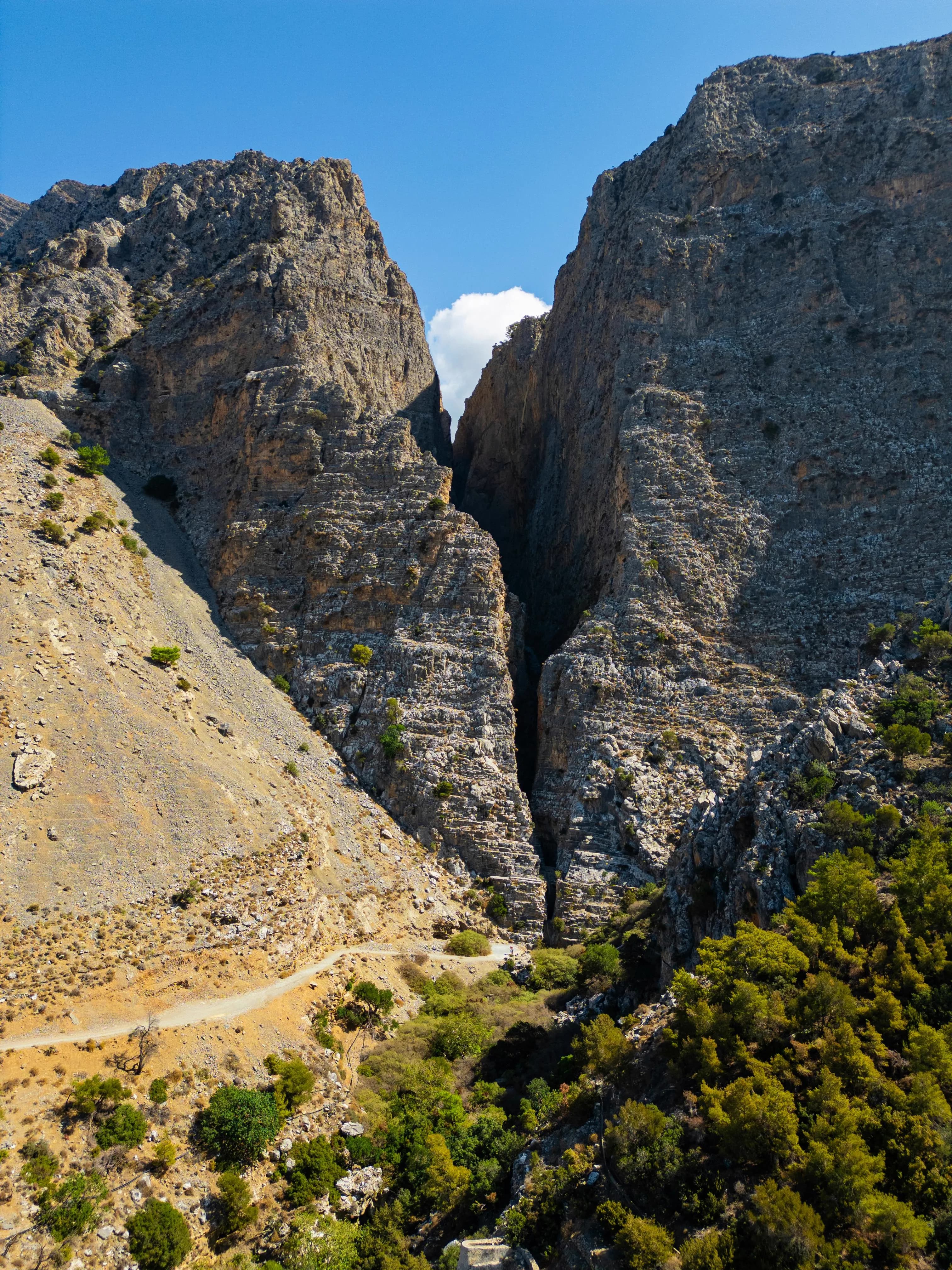
Crete's gorges offer some of Europe's most dramatic hiking. The island's geology, with soft limestone eroded by winter torrents, has carved hundreds of gorges into the mountainsides. Several have been developed for hiking, providing accessible adventures through extraordinary landscapes.5
Samaria Gorge, a UNESCO Biosphere Reserve, is the most famous and for good reason. The 16-kilometer trek from the Omalos Plateau to the seaside village of Agia Roumeli passes through scenery that ranges from alpine to Mediterranean. The "Iron Gates," where the gorge narrows to just four meters while walls tower 300 meters overhead, provide the dramatic climax. The hike is strenuous—expect 5-7 hours of walking with significant elevation change—but requires no technical skills. Hundreds complete it daily in summer; the shoulder seasons offer quieter experiences.
For those seeking solitude, other gorges beckon. Imbros Gorge, shorter and less demanding than Samaria, offers similar dramatic scenery without the crowds. Aradena Gorge attracts adventure seekers with its rope descents and scrambling sections. Zakros Gorge, nicknamed the "Valley of the Dead" for the Minoan burial caves in its walls, provides an easier walk with significant archaeological interest.
Beaches for Every Taste
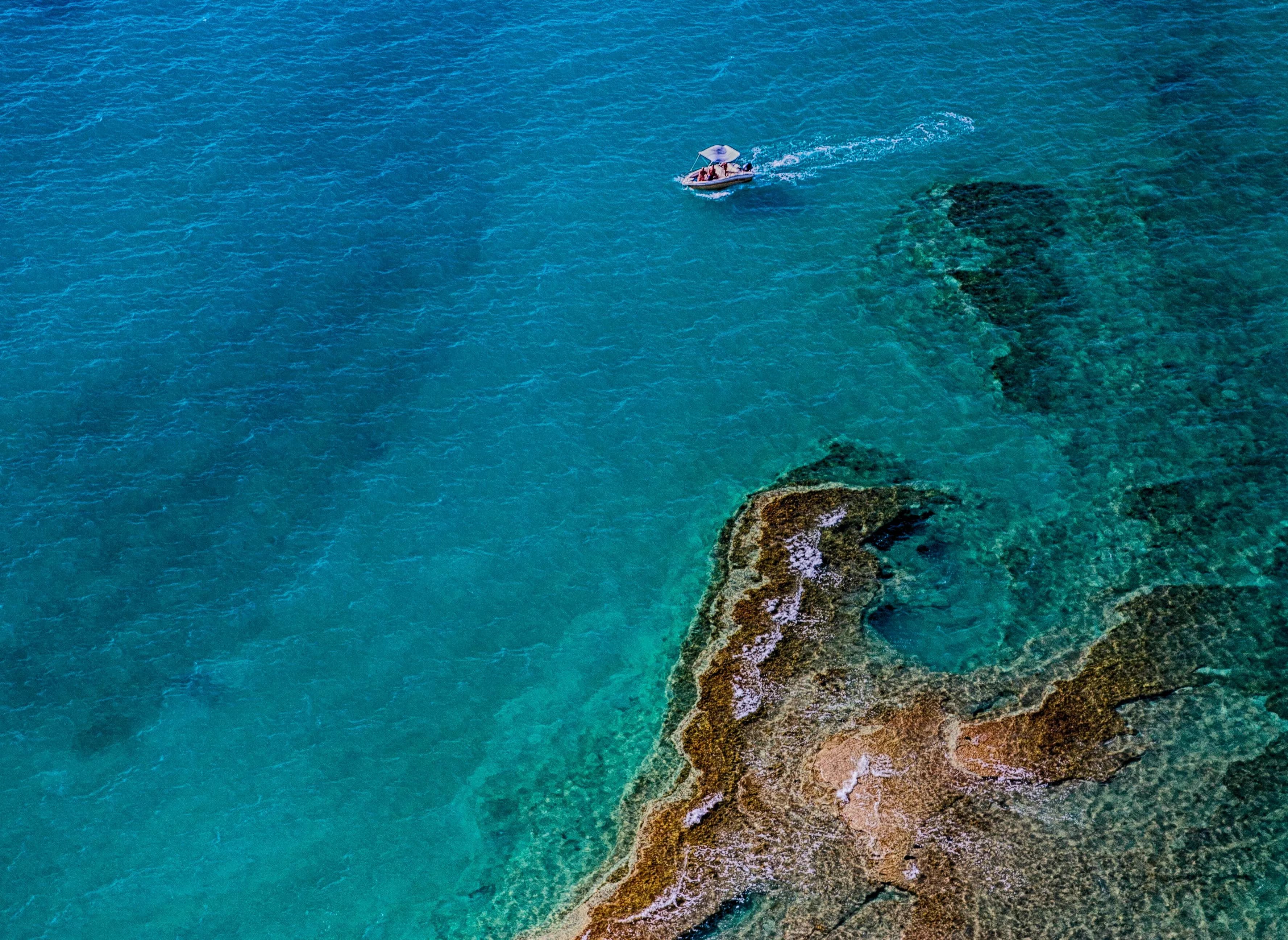
Crete's 1,000 kilometers of coastline encompass beaches for every preference. The north coast, more developed, offers organized beaches with full facilities. The south coast, steeper and less accessible, hides countless coves reachable only by boat or foot. The west features some of Europe's most photographed beaches, their turquoise waters appearing almost Caribbean.6
Elafonisi, near Crete's southwestern tip, has achieved global recognition for its pink-tinged sand and impossibly blue lagoon. The "island"—actually connected to the shore by a sandbar—creates a protected swimming area ideal for families. Crowds can be intense in high summer; visit in May, June, or September for a better experience.
Balos Beach and Lagoon, accessible by boat from Kissamos or via a rough dirt road, rivals Elafonisi for beauty. The dramatic approach by sea, passing the island of Gramvousa with its Venetian fortress, adds to the experience. The shallow lagoon, warm and protected, appeals to those who find the open sea intimidating.
For those seeking less famous alternatives, exploration pays dividends. The beaches near Paleochora on the south coast combine beauty with bohemian atmosphere. Preveli Beach, where a palm-fringed river meets the sea below a historic monastery, offers unique character. The isolated beaches of the eastern south coast—Xerokambos, Kato Zakros, Makrigialos—see few foreign visitors despite their beauty.
The Cities: Chania, Rethymnon, Heraklion, Agios Nikolaos
Crete's cities each offer distinct personalities, their characters shaped by history and geography.7
Chania, the island's most beautiful city, preserves a Venetian old town that ranks among the finest in Greece. The harbor, still protected by its Venetian lighthouse and fortifications, creates one of the Mediterranean's most photographed scenes. Behind the waterfront, a maze of narrow streets reveals Ottoman mosques converted to exhibition spaces, Venetian mansions housing boutique hotels, and traditional workshops where craftsmen still practice their trades.
Rethymnon, smaller than Chania but equally atmospheric, combines Venetian and Ottoman heritage with a lived-in character. The Fortezza, the massive Venetian fortress on the city's promontory, offers commanding views. The old town below maintains more residential character than Chania; you'll share the streets with actual residents rather than just tourists and shopkeepers.
Heraklion, Crete's capital and largest city, suffers from unfair dismissal by visitors who rush through to reach the beaches. The city rewards those who linger. The Venetian walls, among the best-preserved in the Mediterranean, encircle a historic center rich with interest. The Morosini Fountain, the Venetian Loggia, the Cathedral of Agios Minas—Heraklion's monuments merit attention. And the Archaeological Museum, housing the world's finest collection of Minoan artifacts, absolutely demands a visit.
Agios Nikolaos, in eastern Crete, offers a different atmosphere: more resort town than historic center. The small harbor, connected to Lake Voulismeni by a channel, creates a picturesque setting for waterfront dining. The town serves as a convenient base for exploring eastern Crete, including the palm beach at Vai and the Minoan palace at Zakros.
Cretan Cuisine: The Original Mediterranean Diet
Cretan cuisine deserves special attention. The famous Seven Countries Study, conducted in the 1960s, found that Cretans had the lowest rates of heart disease and the highest life expectancy of any population studied—despite relatively high fat consumption. The secret lay in what they ate: abundant olive oil, wild greens, legumes, moderate amounts of fish and dairy, minimal red meat, and local wine. This pattern, later termed the Mediterranean Diet, began on Crete.8
Traditional Cretan dishes showcase this heritage. Dakos, a simple preparation of soaked barley rusks topped with tomatoes, feta, and olive oil, appears on every taverna menu. Kalitsounia, small pastries filled with wild greens or sweet cheese, demonstrate the island's mastery of phyllo. Lamb or goat cooked with stamnagathi (spiny chicory) shows how meat serves as flavoring rather than main event. Snails, prepared numerous ways, reflect both the island's poverty history and culinary creativity.
Olive oil defines Cretan cooking. The island produces some of Greece's finest oils, predominantly from the koroneiki variety. Cretans consume more olive oil per capita than any other population—over 30 liters annually—using it not just for cooking but drizzled generously on finished dishes. The quality of local oil makes this excess not just healthful but delicious.
Rakí (also called tsikoudiá), Crete's grape pomace spirit, accompanies every meal and social occasion. Unlike commercial ouzo or grappa, traditional rakí is unaged and unsweetened, its flavor varying with the producer. Accepting offered rakí demonstrates respect; refusing can offend. Pace yourself accordingly.
Practical Considerations
Crete's size demands transportation decisions. Renting a car provides maximum flexibility and access to remote areas impossible to reach by public transport. The road network has improved dramatically, though mountain roads still require careful driving. Bus services connect major towns but run infrequently to villages.9
The question of where to base yourself depends on your interests. Chania appeals to those prioritizing atmosphere and western Crete's beaches and gorges. Rethymnon offers a central location with easy access to both east and west. Heraklion suits those focused on archaeology and the eastern sites. Multiple bases, moving every few days, allows comprehensive exploration.
Timing matters significantly. July and August bring crowds and heat; the gorges become uncomfortably crowded and some close during fire danger. May, June, September, and October offer ideal conditions: warm enough for swimming, cool enough for hiking, quiet enough for authentic experiences. Spring wildflowers make April and May particularly beautiful.
The Cretan Character
Perhaps Crete's greatest attraction is its people. Cretans maintain a distinctive identity within Greece, proud of their history of resistance to foreign occupation, their preservation of traditional culture, their hospitality to strangers. This isn't tourist-brochure platitude; spend time in village kafeneia or accept invitations to family celebrations and you'll experience generosity that can be overwhelming.10
The Cretan character blends seeming contradictions: fierce independence with warm hospitality, traditional values with progressive attitudes, intense local pride with openness to outsiders. Music and dance remain living traditions rather than museum pieces; village festivals feature mantinades (improvised rhyming couplets) and the pentozali dance into the early hours. These aren't performances for tourists but expressions of cultural continuity.
An Island for a Lifetime
After all these years, Crete continues to surprise me. A new gorge to hike, a village festival discovered by chance, a taverna serving grandmother's recipes in some mountain hamlet—the island's depth seems inexhaustible. This is the quality that sets Crete apart from smaller islands, where a week's visit might exhaust the possibilities. Here, every return reveals new dimensions.
For first-time visitors, I suggest surrendering to Crete's scale rather than fighting it. Accept that you cannot see everything. Choose a region and explore it thoroughly rather than racing across the island checking boxes. Allow time for the unexpected invitation, the unplanned stop at a roadside chapel, the two-hour lunch that stretches into evening. Crete rewards those who adopt its rhythm, who understand that the destination matters less than the manner of traveling.
Some visitors come to Crete once and never return, satisfied with a beach week and a day at Knossos. Others become devotees, returning year after year to deepen their understanding. I count myself among the latter group. The island's combination of natural beauty, historical depth, culinary excellence, and human warmth creates something unique in the Mediterranean—an island that genuinely has it all, for those willing to discover it.
References
- Crete: Geography and Overview — Britannica
- Minoan Civilization — World History Encyclopedia
- Palace of Knossos — UNESCO Tentative List
- Mountain Villages of Crete — Discover Greece
- Samaria Gorge National Park — Samaria National Park
- Beaches of Crete — Incredible Crete
- Cities of Crete — Visit Greece
- The Cretan Mediterranean Diet — Harvard T.H. Chan School of Public Health
- Getting Around Crete — Lonely Planet
- Cretan Culture and Traditions — Explore Crete