Nestled in the slopes of the Argolid Peninsula in the Peloponnese, Epidaurus is one of Greece's most remarkable ancient sites, a place steeped in history and myth that rewards visitors with both intellectual wonder and genuine emotional impact. While it can be overrun with tourists in the height of summer, visiting during the shoulder seasons or winter reveals Epidaurus at its most atmospheric and contemplative.1
The Asklepieion: Birthplace of Ancient Medicine
The site was home to the Temple of Asclepius, the Greek god of healing, and the renowned Asklepieion, the ancient world's most celebrated healing center. Patients traveled from across the Mediterranean to be treated here, seeking cures through a remarkable combination of medicine, ritual, and what we might today call holistic wellness. Visiting priests administered herbal remedies, prescribed therapeutic baths in natural hot springs, and guided patients through incubation rituals where they would sleep in sacred dormitories hoping to receive healing visions from Asclepius himself.2
The Asklepieion at Epidaurus is considered one of the most important locations in the history of ancient medicine. The practices developed here laid foundations that would influence Hippocrates and, through him, the entire Western medical tradition. The site has been designated a UNESCO World Heritage Site in recognition of its extraordinary historical significance.3
Walking the ruins of the Asklepieion today, you can trace the outlines of the various treatment buildings, the abaton (the sacred dormitory where patients slept), the tholos (a mysterious circular building whose precise function scholars still debate), and the temple itself. The site's peaceful setting among pine-covered hills adds to the sense that this was a place designed for restoration and contemplation.
The Theater: A Marvel of Ancient Engineering
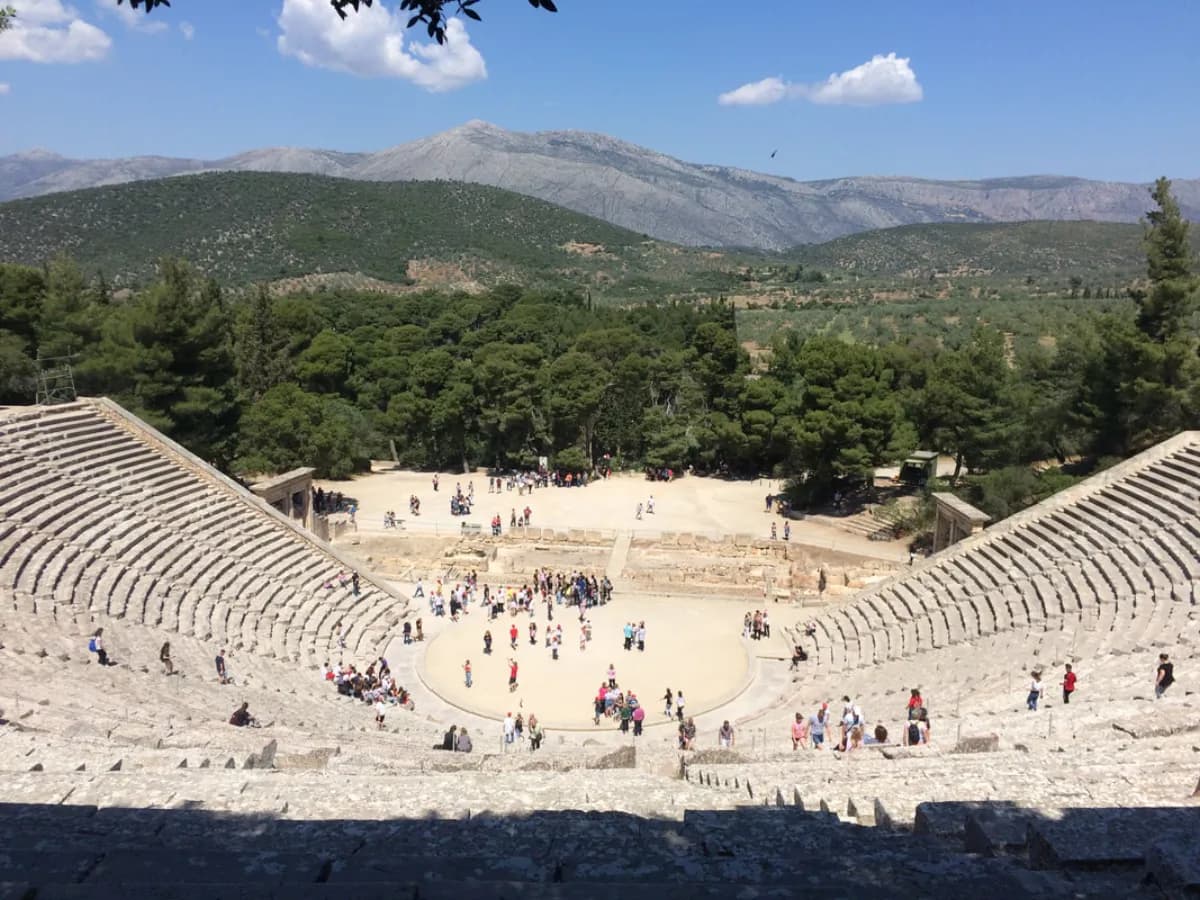
Today Epidaurus is most famous for its magnificent amphitheater, one of the most well-preserved ancient theaters in Greece and arguably the finest example of ancient Greek theater architecture anywhere in the world. Built in the late 4th century BCE, it seats up to 14,000 spectators across 55 rows of limestone seats that climb gracefully into the hillside.4
The theater's acoustics are legendary, and I can confirm from personal experience that they never fail to astonish. You can famously drop a coin on the circular orchestra at the center of the stage and hear it clearly from the very last seat at the top, some 60 meters away. Every time I bring guests here, we test this, and the result is always the same: a small metallic ping that carries with impossible clarity through the open air. Scientists have studied these acoustics for decades and attribute them to the precise geometry of the seating rows, which act as an acoustic filter, suppressing low-frequency background noise while amplifying the high-frequency sounds of human speech and music.5
In ancient times, the theater was not merely entertainment but an integral part of the healing treatment. The Greeks understood that dramatic performance, with its capacity for catharsis and emotional release, served a therapeutic function. Watching a tragedy by Euripides or a comedy by Aristophanes was considered medicine for the soul, complementing the physical treatments offered at the Asklepieion.
The Epidaurus Festival: Living Tradition
The theater continues to fulfill its original purpose. Every summer, the Athens and Epidaurus Festival brings the ancient stage back to life with performances of classical Greek drama and modern works. Watching a performance of Sophocles or Euripides in the very theater where such plays were first performed, under a canopy of stars with the Argolid hills silhouetted against the sky, is one of the most powerful cultural experiences Greece has to offer.6
The festival typically runs from June through August, and tickets are well worth securing in advance. Performances begin at sunset, and the gradual transition from daylight to starlight as the drama unfolds adds an atmospheric dimension impossible to replicate in any modern venue.
The Archaeological Museum
The on-site museum houses an excellent collection of artifacts from the sanctuary, including surgical instruments that testify to the sophisticated medical practices of the ancient healers, votive offerings left by grateful patients, and architectural fragments from the temple and tholos. The collection of inscriptions recording miraculous cures offers a fascinating window into the ancient patients' experiences and the ailments they brought to Asclepius.7
Planning Your Visit
Epidaurus lies approximately 30 kilometers east of Nafplio, making it an easy day trip from that charming town. The drive through the Argolid countryside, past olive groves and citrus orchards, is lovely in itself. Allow at least two to three hours to explore the theater, the Asklepieion ruins, and the museum without feeling rushed.
While summer brings the festival performances and the longest days, I particularly recommend visiting in spring or autumn. The temperatures are comfortable, the site is far less crowded, and the surrounding landscape is at its most beautiful. Winter visits offer the most solitary experience, when you might have the theater almost entirely to yourself, standing in the orchestra and testing those famous acoustics with no one else around.
References
- Sanctuary of Asklepios at Epidaurus — UNESCO World Heritage
- The Asklepieion at Epidaurus — World History Encyclopedia
- Ancient Greek Medicine and Epidaurus — Britannica
- The Ancient Theater of Epidaurus — Discover Greece
- Acoustics of the Theater at Epidaurus — Acoustical Society of America
- Athens & Epidaurus Festival — Athens & Epidaurus Festival Official
- Epidaurus Archaeological Museum — Hellenic Ministry of Culture