One of the first things I learned after moving to Greece over thirty years ago was that if someone tells you their name, they have also told you a date. In Greece, your name is more than an identity -- it is a link to a saint, a feast day, a centuries-old tradition that weaves together family, faith, and community in a way that few other customs can. Understanding Greek name days and the role of saints in daily life is, I believe, one of the most important keys to truly understanding Greek culture and traditions. And of all the saint days celebrated across this country, none has captivated me quite like the Feast of St. Demetrios on October 26 and the extraordinary celebrations that sweep through the city of Thessaloniki.1
Understanding Greek Name Days: A Tradition Deeper Than Birthdays
In most Western countries, your birthday is the day everyone celebrates you. In Greece, it is your name day -- your "giorti" -- that truly matters. The Greek Orthodox Church follows a liturgical calendar called the "eortologio," which assigns one or more saints to every single day of the year. If you share a name with the saint being honored on a given day, that day becomes your personal celebration, your name day.2
The tradition of how names are chosen runs deep in Greek families and follows a very specific pattern that has been observed for generations. Traditionally, the firstborn son is named after his paternal grandfather, and the firstborn daughter after her paternal grandmother. The second son takes the name of the maternal grandfather, and the second daughter, the maternal grandmother. Somewhere in the distant past, these grandparents were themselves named after saints, creating an unbroken chain of names stretching back through centuries of Greek history. This means that in any Greek family gathering, you will often find multiple people with the same name -- a room full of Dimitris or Marias is not unusual at all.
What makes Greek name days so special is the way they are celebrated. On the morning of your name day, your phone begins ringing early. Friends, relatives, colleagues, even casual acquaintances call to wish you "Chronia Polla" -- "Many Years." It is considered almost rude not to acknowledge someone's name day if you know their name. In villages and smaller communities, everyone knows everyone else's name, so the wishes flow all day long. I remember my first years in Greece, being astonished at how people I barely knew would stop me in the street to wish my husband Chronia Polla on his name day.
Unlike birthdays, where the guests bring gifts and the host might prepare a celebration, Greek name days have their own etiquette. The person celebrating is expected to be the one who treats. They open their home to visitors, lay out a spread of sweets, pastries, and drinks, and receive guests who drop by throughout the day and evening -- often without formal invitations. In offices, the person whose name day it is will bring a box of pastries or chocolates for colleagues. Close family members do bring gifts, but the dynamic is distinctly different from a birthday party.
For many older Greeks and those living in rural areas, birthdays are barely noted at all. The name day is the significant celebration. I have known Greeks who genuinely do not remember their exact birthday but would never forget their name day. Among younger generations in Athens and other cities, birthdays have gained more prominence under Western cultural influence, but the name day remains deeply respected.
There is also a practical charm to the tradition. Because name days are fixed on the calendar and most common Greek names correspond to well-known saints, everyone knows when to offer wishes. You do not need to remember hundreds of different dates the way you might with birthdays. If your friend is named Yiorgos, you know his name day is April 23, the feast of Agios Georgios (St. George). If your neighbor is named Eleni, it is May 21, the feast of Saints Constantine and Helen. This shared calendar of celebrations creates a beautiful rhythm throughout the Greek year.2
Saints in Greek Culture: Faith, Miracles, and Everyday Devotion
To understand the significance of name days, you must understand the role that saints play in Greek Orthodox life. Saints are not distant historical figures in Greece -- they are active participants in daily existence. They are venerated, prayed to, and relied upon in ways that might surprise visitors from more secular cultures. For the faithful, saints are intercessors, protectors, and miracle workers whose presence is felt in churches, homes, and public spaces across the country.3
Every Greek Orthodox church is dedicated to a particular saint, and every city, town, and village has a patron saint believed to watch over the community. Icons of saints occupy a central place not only in churches but in Greek homes, where a small "iconostasi" -- a corner shelf or cabinet with icons, an oil lamp, and perhaps dried flowers from Palm Sunday -- is a standard feature. Many Greeks begin and end their day by lighting the lamp and offering a brief prayer before their family icons.
One of the most fascinating traditions connected to saints is the practice of "tamata" -- votive offerings made to saints in exchange for miracles requested or granted. Tamata are typically small metal plaques, often made of silver or tin, embossed with images that symbolize the petitioner's need. A heart-shaped tama might represent a prayer for love or recovery from heart disease. An eye-shaped tama indicates prayer for healing an eye affliction. A small ship represents a prayer for safe voyage. Hands, legs, babies, houses -- every human concern has its corresponding tama.4
If you visit any major church or pilgrimage site in Greece, you will see these tamata pinned beside icons, sometimes in such profusion that they cover entire walls. The Church of the Panagia (Virgin Mary) on the island of Tinos, Greece's most important Marian pilgrimage site, has rooms filled with tamata and other offerings -- jewelry, military medals, even crutches left behind by those who believe they were healed. The tradition has roots stretching back over three thousand years to ancient Greece, where similar offerings were made at the temples of Asclepius, the god of healing.4
I have personally witnessed the deep sincerity with which Greeks approach their saints. I have seen elderly women walk on their knees up the hill to the Church of the Annunciation on Tinos. I have watched fishermen cross themselves as they pass a seaside chapel. I have sat in tiny village churches during a panigiri -- the feast day celebration of the local patron saint -- as the entire community gathered to honor the saint with liturgy, processions, feasting, music, and dancing that lasted well into the night. These are not performances for tourists. They are living expressions of a faith that permeates Greek culture at every level.
Patron saints of cities hold a particularly important place. Athens has its own protector in St. Dionysius the Areopagite. The island of Corfu celebrates St. Spyridon with extraordinary processions four times a year. Zakynthos honors St. Dionysius. Crete reveres St. Titus. And Thessaloniki -- beautiful, vibrant Thessaloniki -- belongs body and soul to St. Demetrios.1
The Feast of St. Demetrios: October 26
Of all the saint days throughout the Greek year, the Feast of St. Demetrios on October 26 holds a place of particular magnificence. St. Demetrios -- known as Agios Dimitrios in Greek -- is one of the most beloved saints in the entire Orthodox world, and his story is one of courage, faith, and a miraculous connection to the city he has protected for over seventeen centuries.1
Demetrios was born around 280 AD in Thessaloniki, which was already a major urban center of the Roman Empire. He came from a distinguished family of the province of Macedonia and was admired not only for his noble ancestry but for his wisdom, virtue, and character. His military talents led Emperor Galerius to appoint him as a high-ranking military commander and proconsul. But Demetrios was, in secret, a devout Christian during a time when the Roman Empire ruthlessly persecuted followers of Christ.5
Rather than simply holding his faith privately, Demetrios used his position to teach and preach the Gospel, converting many pagans to Christianity. When Emperor Maximian discovered this, he was furious. Demetrios was arrested and imprisoned in the basement of a Roman bathhouse near the forum of Thessaloniki. According to tradition, it was in that very cell, around the year 306 AD, that Roman soldiers thrust their lances through him, making him a martyr for his faith.5
What happened after his death elevated Demetrios from martyr to miracle worker. In the seventh century, a mysterious flow of fragrant myrrh was discovered emanating from his tomb. This phenomenon earned him the extraordinary title "Myrovlitis" -- the Myrrh-Gusher or the Myrrh-Streamer. A magnificent basilica, the Church of Agios Dimitrios, was built over the site of his martyrdom, and it remains one of the most important churches in the Orthodox world. If you visit the crypt beneath the church today, you can still see the site where the myrrh was said to flow -- it is an experience that moves believers and non-believers alike.5
Over the centuries, the people of Thessaloniki have attributed countless miracles to St. Demetrios, particularly the defense of the city against invaders. According to tradition and church records, St. Demetrios appeared on the city walls during sieges by Slavs, Avars, Bulgarians, and Saracens, rallying the defenders and turning back the attackers. He was seen mounted on a white horse, wielding a spear -- the warrior-saint defending his city from beyond the grave.
The most remarkable historical coincidence came on October 26, 1912. During the First Balkan War, the Greek Army liberated Thessaloniki from nearly five centuries of Ottoman rule on the exact feast day of St. Demetrios. For the people of Thessaloniki, this was no coincidence. Their saint had delivered them once more.6
Celebrating in Thessaloniki: Processions, Lights, and the Demetria Festival
I have had the privilege of being in Thessaloniki for the Feast of St. Demetrios, and it is an experience I encourage every visitor to Greece to seek out. The city transforms. There is an electricity in the air, a sense of collective joy and reverence that sweeps through the streets, the waterfront, and every neighborhood from the harbor to the hilltop fortress of Ano Poli.
The religious celebrations begin with a solemn liturgy at the Church of Agios Dimitrios, the great basilica that stands over the saint's martyrdom site. The church, a UNESCO World Heritage Site, fills to overflowing. Then comes the procession -- the icon of St. Demetrios, ornately framed and adorned with flowers, is carried through the streets by priests in full vestments, followed by civic leaders, military officials, and thousands upon thousands of faithful. Marching bands play, church bells ring, and the crowd lines the route, many crossing themselves as the icon passes.
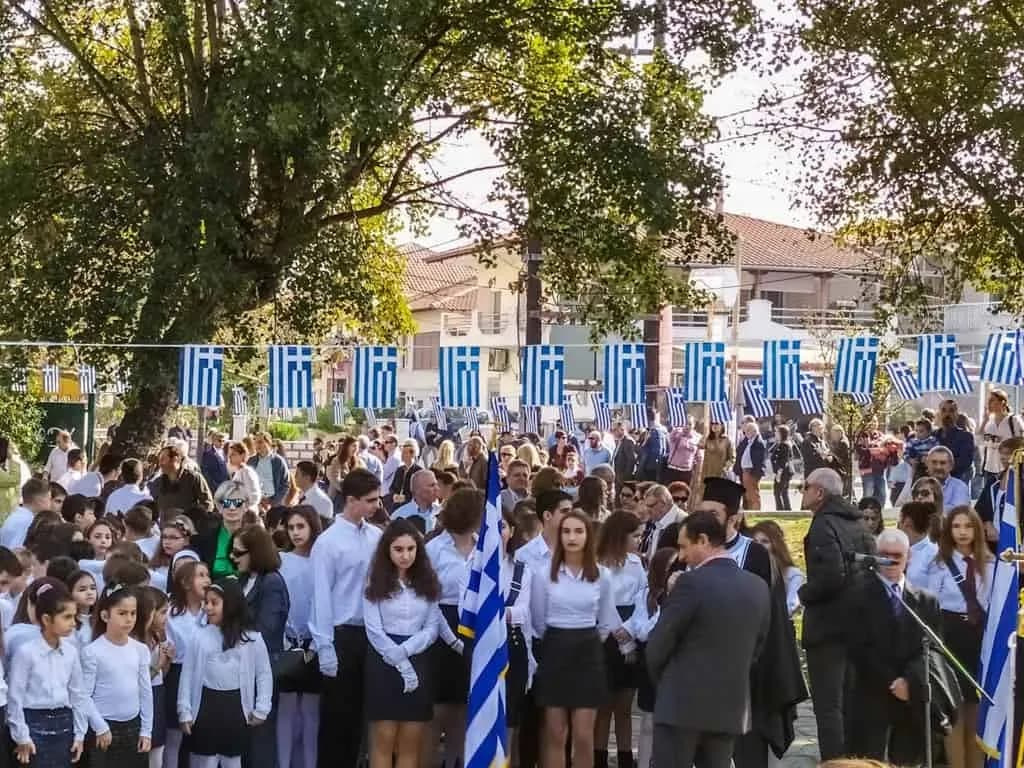
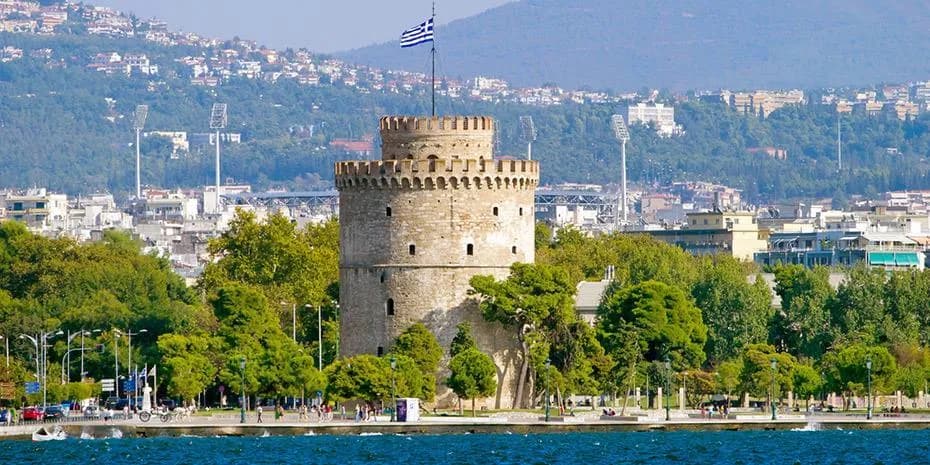
The city is beautifully lit up for three consecutive nights, with the illumination of the White Tower and the waterfront promenade creating a magical atmosphere. These three nights encompass both the feast of St. Demetrios on October 26 and the national holiday of "Oxi Day" on October 28. The two celebrations blend together into an extended period of national and civic pride, with military parades, school processions, and cultural events filling the days between.
The cultural celebrations actually begin well before October 26, thanks to the Dimitria Festival. This extraordinary cultural institution, which dates back to 1966 in its modern form but has roots in medieval Byzantine trade fairs, is the largest cultural and intellectual festival in northern Greece. Running from early autumn through late October, the Dimitria Festival features theatrical performances, concerts, dance shows, art exhibitions, film screenings, and literary events. In 1995, the festival joined the European Union of International Festivals.7
What strikes me most about being in Thessaloniki during this period is how the sacred and the secular intertwine so naturally. You might attend a morning liturgy at the basilica, watch the afternoon procession through the city center, enjoy an evening performance at the Dimitria Festival, and then sit at a waterfront taverna until late into the night. This is the Greek way -- faith and life are not separate compartments but a single, seamless experience.
Thessaloniki: Greece's Cultural Co-Capital
I have spoken about Thessaloniki many times, including on the Amateur Traveler podcast, where I shared my deep love for this city. Where Athens can feel chaotic and overwhelming, Thessaloniki is a big city with a small-town feel. It is wonderfully walkable, endlessly interesting, and blessed with a waterfront that serves as the city's living room.
Founded in 315 BCE by King Cassander of Macedon, who named it after his wife -- who happened to be Alexander the Great's half-sister -- Thessaloniki has been shaped by an extraordinary succession of civilizations. Ancient Macedonian, Roman, Byzantine, Ottoman, and Sephardic Jewish cultures have all left their imprint on the city.8
If you see only one area of the city, make it Ano Poli -- the Upper Town. This is the only part of Thessaloniki that survived the devastating Great Fire of 1917. Small stone-paved streets wind between traditional houses in Greek and Ottoman architectural styles. Byzantine churches that are UNESCO World Heritage Sites sit quietly among residential neighborhoods where laundry hangs from balconies and cats drowse in doorways. The views from the Byzantine walls down over the city and across the Thermaic Gulf are breathtaking, particularly at sunset.
The White Tower, Thessaloniki's most recognizable landmark, stands on the waterfront promenade and serves as the unofficial symbol of the city. Walking the promenade from the White Tower toward the concert hall at sunset, with the water shimmering and Mount Olympus visible in the distance on clear days, is one of the great simple pleasures in all of Greece.
Thessaloniki is rightly famous for its cuisine -- many Greeks consider it the culinary capital of the country. The food here reflects the city's multicultural heritage. Ottoman influences appear in the rich meze tradition and the coffee culture. Sephardic Jewish recipes survive in local bakeries. The Asia Minor refugees who arrived after 1923 brought dishes like soutzoukakia, koulouri, and an entire tradition of sophisticated pastry-making. The Modiano Market, recently renovated, is the beating heart of this food culture.
The city's Byzantine heritage is extraordinary. Fifteen of Thessaloniki's early Christian and Byzantine monuments are collectively designated as a UNESCO World Heritage Site. The Rotunda, built by the Roman Emperor Galerius around 306 AD, contains stunning early Christian mosaics. The Church of Agia Sophia, modeled after its more famous Constantinople namesake, dates to the eighth century.
The Jewish history of Thessaloniki is another profound dimension of the city's identity. For centuries, Sephardic Jews formed the majority of the city's population, earning Thessaloniki the name "Mother of Israel." The community was tragically destroyed during the Holocaust, when over 48,000 Thessalonikian Jews were deported and murdered. Today, the Jewish Museum of Thessaloniki preserves this heritage.
I always recommend that visitors spend at least three days in Thessaloniki itself, and then use it as a base for exploring the extraordinary surrounding region -- the archaeological site of Vergina with the tomb of Philip II, the monastic communities of Mount Athos, the beaches of Halkidiki, and the dramatic landscapes of Mount Olympus.
Other Important Saint Days Throughout the Year
While the Feast of St. Demetrios is among the most spectacular saint day celebrations in Greece, the calendar is filled with significant days that shape the rhythm of Greek life throughout the year.2
January 1 -- Agios Vasileios (St. Basil the Great): New Year's Day in Greece is also the feast of St. Basil. This is the day when Greeks exchange gifts -- not Christmas. The Vasilopita, a special New Year's cake with a coin baked inside, is cut at midnight, and the person who finds the coin is said to have good luck for the year.
January 6 -- Theophany (Epiphany): The Blessing of the Waters is one of the most dramatic celebrations in the Greek Orthodox calendar. A priest throws a cross into the sea, a river, or a lake, and young men dive in to retrieve it. The one who finds it is blessed with good fortune.
March 25 -- The Annunciation: This double holiday celebrates both the Annunciation of the Virgin Mary and Greek Independence Day, commemorating the start of the Greek War of Independence in 1821. The entire country celebrates with parades and traditional meals of salted cod with garlic sauce.
April 23 -- Agios Georgios (St. George): St. George, the dragon slayer, is one of the most popular saints in Greece and the patron saint of shepherds and the army. Every Giorgos and Georgia celebrates -- and these are among the most common names in Greece.
May 21 -- Saints Constantine and Helen: This feast honors the first Christian Roman Emperor and his mother. It is the name day for Konstantinos and Eleni -- some of the most popular names in Greece. The fire-walking ritual of the Anastenaria in northern Greece takes place around this date.
August 15 -- The Dormition of the Virgin Mary: This is, after Easter, the most important religious celebration in Greece. The entire country essentially shuts down. Greeks return to their ancestral villages. The island of Tinos receives tens of thousands of pilgrims.3
November 30 -- Agios Andreas (St. Andrew): The patron saint of Patras is celebrated with great processions in that city. St. Andrew's relics are housed in the grand basilica of Agios Andreas in Patras.
December 6 -- Agios Nikolaos (St. Nicholas): The patron saint of sailors is deeply loved in this seafaring nation. Coastal churches dedicated to him are found in virtually every port and fishing village.
Experiencing Greek Saint Days as a Visitor
If you are planning a visit to Greece, I cannot recommend strongly enough that you try to time part of your trip to coincide with a major saint day celebration. These events offer an authentic window into Greek culture and traditions that no museum or archaeological site can replicate.
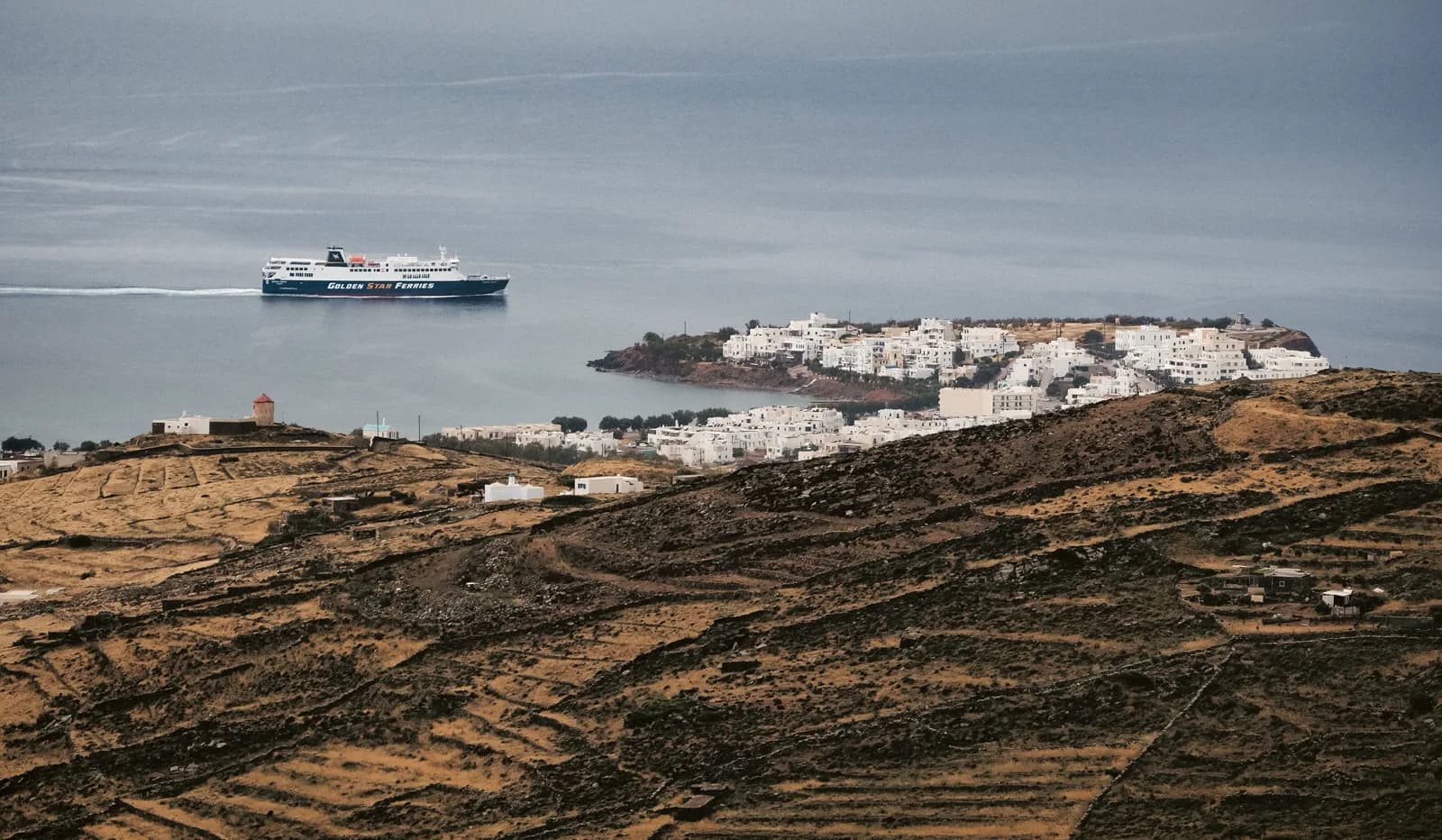
Be aware of the calendar. Major saint days can affect your travel plans in practical ways. On August 15 and other major celebrations, ferries and hotels are booked well in advance as Greeks travel to their home villages. Shops and businesses may close. Plan accordingly, but do not avoid these dates -- embrace them.
Visit the church. Even if you are not Orthodox or not particularly religious, attending the liturgy and procession on a saint's feast day is a profound cultural experience. Dress modestly -- long pants or skirts, covered shoulders. Do not take flash photographs during the liturgy, but discreet photography is generally acceptable during processions.
Join the panigiri. After the religious observance, many saint day celebrations transition into a panigiri -- a community festival with food, music, and dancing. In villages, these are often held in the church courtyard or the village square. Do not be surprised if strangers invite you to sit at their table, offer you wine, or pull you into a dance. This is Greek hospitality at its finest.
Wish people well. If you know someone named after the saint being celebrated, wish them "Chronia Polla" (Many Years). They will be touched that you know the custom.
Seek out lesser-known celebrations. While the major saint days in large cities are spectacular, some of the most memorable celebrations happen in small villages and on remote islands. Ask locals about upcoming celebrations in the area you are visiting -- they will be delighted to direct you.
For St. Demetrios specifically, if you can be in Thessaloniki around October 26, do it. The combination of the religious celebration, the Demetria Festival, the city illumination, and the Oxi Day celebrations on October 28 creates a week unlike any other in Greece. The weather in late October is usually mild and pleasant, the summer crowds have departed, and the city pulses with an energy that perfectly captures the spirit of visiting Thessaloniki at its very best.
After more than thirty years of living in Greece, the saint days remain among my favorite aspects of Greek life. They connect past and present, sacred and secular, family and community in ways that feel increasingly rare in the modern world. Whether you are a devout believer, a cultural traveler, or simply someone who loves a good celebration, Greece's saint days offer something genuinely moving. And if you would like help planning a trip that includes one of these remarkable celebrations, I would love nothing more than to be your guide.8
References
- Saint Demetrius of Thessaloniki — Greek City Times
- Greek Name Days and Traditions — Greeka
- Greek Orthodox Feast Days — Greek Orthodox Archdiocese of America
- Tamata: Greek Votive Offerings — Atlas Obscura
- The Basilica of Saint Demetrios — UNESCO World Heritage
- Liberation of Thessaloniki 1912 — Encyclopaedia Britannica
- Dimitria Festival Thessaloniki — Thessaloniki Tourism
- Things to Do in Thessaloniki - Amateur Traveler Podcast — Amateur Traveler