Every year on October 28, Greece comes to a standstill. Schools close, government offices shut their doors, and the rhythm of daily life gives way to something solemn, proud, and deeply felt. This is Oxi Day -- or as we say it in Greek, "Ohi" (pronounced "Oh-hee") -- the day that commemorates one of the most defining moments in modern Greek history. After more than thirty years of living in Greece, I have witnessed dozens of these celebrations, and I can tell you that Oxi Day is far more than a date on the calendar. It is a window into the Greek soul, a day when the entire nation remembers what it means to stand firm in the face of overwhelming odds.1
If you are planning to visit Greece in October or simply want to understand Greek culture on a deeper level, Oxi Day offers one of the most authentic and moving experiences you can have in this country. Let me walk you through the history, the celebrations, and what it is like to witness this remarkable Greek national holiday firsthand.
What Is Oxi Day?
Oxi Day, also written as Ohi Day or Ochi Day, falls on October 28 each year and is one of the two most important national holidays in Greece -- the other being March 25, Greek Independence Day. The word "Oxi" simply means "No" in Greek, and it refers to the refusal of Greek Prime Minister Ioannis Metaxas to submit to an ultimatum delivered by Italian dictator Benito Mussolini in the early hours of October 28, 1940.
The story is dramatic, almost cinematic in its intensity. At approximately three o'clock in the morning, the Italian ambassador to Greece, Emanuele Grazzi, arrived at Metaxas' residence in the Athens suburb of Kifissia. He carried an ultimatum from Mussolini: Greece must allow Italian troops to cross the border and occupy unspecified "strategic locations" within Greek territory, or face immediate war. The deadline given was impossibly short -- compliance was demanded by six o'clock that same morning, just three hours later.2
Metaxas, roused from sleep, read the ultimatum and gave his response in French, the diplomatic language of the era: "Alors, c'est la guerre!" -- "Then it is war!" This single declaration, made by one man in the dead of night, would alter the course of the Second World War and define the Greek national character for generations to come.3
In the hours and days that followed, word of Metaxas' defiant refusal spread through Athens and across the entire country. The Greek people, galvanized by their leader's courage, poured into the streets shouting a single word: "Oxi! Oxi! Oxi!" -- "No! No! No!" The word became a rallying cry, a symbol of resistance, and ultimately the name by which this historic day would forever be known.
The Historical Context: Italy's Ultimatum and the War That Followed
To truly appreciate the weight of Oxi Day, you need to understand the situation Greece faced in October 1940. Europe was already deep in the grip of the Second World War. France had fallen to Nazi Germany just months earlier. Britain stood virtually alone against the Axis powers. Mussolini, eager to prove Italy's military prowess and frustrated by Hitler's dominance of the Axis alliance, set his sights on Greece as an easy conquest that would extend Italian control across the eastern Mediterranean.4
Italy had already occupied Albania in 1939, positioning its forces directly on Greece's northwestern border. Mussolini calculated that Greece, a small nation with a modest military, would either capitulate to the ultimatum or be swiftly overwhelmed by the superior Italian forces. He reportedly boasted to Hitler that he would conquer Greece within two weeks. He could not have been more wrong.
Before the ultimatum's deadline had even expired, at 5:30 in the morning on October 28, Italian forces poured across the Greek-Albanian border into the steep and unforgiving Pindus Mountains of northwestern Greece. What followed shocked the world. The Greek army, vastly outnumbered and outgunned, did not merely resist the Italian invasion -- they repelled it entirely. Greek soldiers, many of them conscripts from mountain villages who knew the terrain intimately, fought with a ferocity and determination that stunned the Italian military command.2
Within weeks, the Greek counteroffensive had pushed the Italian forces back across the border and deep into Albanian territory. By mid-December 1940, Greek troops occupied nearly a quarter of Albania, tying down an estimated 530,000 Italian soldiers in a campaign that was supposed to last two weeks. It was the first significant Allied land victory of the entire war, and it delivered a devastating blow to the myth of Axis invincibility that had seemed so absolute after the fall of France and the conquest of most of continental Europe.
The Greek resistance carried strategic consequences that extended far beyond the Balkans. Mussolini's humiliating failure in Greece forced Adolf Hitler to intervene. In April 1941, Germany launched its own invasion of Greece and Yugoslavia, diverting significant military resources southward. The German campaign in Greece lasted approximately five weeks and inflicted considerable wear on tanks and armored equipment that had been earmarked for the planned invasion of the Soviet Union. Germany's Operation Barbarossa was ultimately launched on June 22, 1941 -- more than five weeks later than its originally planned date of May 15. While historians continue to debate the precise impact of the Balkan campaigns on Barbarossa's timetable, the diversion of German resources to Greece was an unplanned and costly complication for the Axis war effort.5
The praise from Allied leaders was immediate and effusive. Winston Churchill, in tribute to the Greek resistance, declared: "Today we say that Greeks fight like heroes. From now on we will say that heroes fight like Greeks." French General Charles de Gaulle also issued praise for the heroic Greek resistance, and messages of admiration arrived from leaders and citizens across the free world. The small, defiant nation had captured the admiration of the Allies at a time when victories were desperately scarce and morale hung by a thread.6
Greece ultimately fell to the combined German and Italian assault in April 1941, beginning a brutal occupation that lasted until 1944. The occupation years brought devastating famine, particularly during the winter of 1941-1942 when tens of thousands perished in Athens alone, along with fierce resistance movements and terrible reprisals from the occupiers. Yet the spirit of "Oxi" endured through those darkest years, sustaining a population that refused, even under occupation, to consider itself defeated.
How Oxi Day Is Celebrated Today
Having lived through so many Oxi Day celebrations here in Greece, I can tell you that the day has a rhythm and structure that is both predictable and deeply moving every single time. The celebrations typically begin the evening before, on October 27, when schools hold their preparatory events and communities gather for commemorative programs.
The centerpiece of every Oxi Day celebration is the parade, and parades take place in virtually every city, town, and village across Greece. There are two main types: student parades and military parades, and they unfold differently depending on where you are in the country.
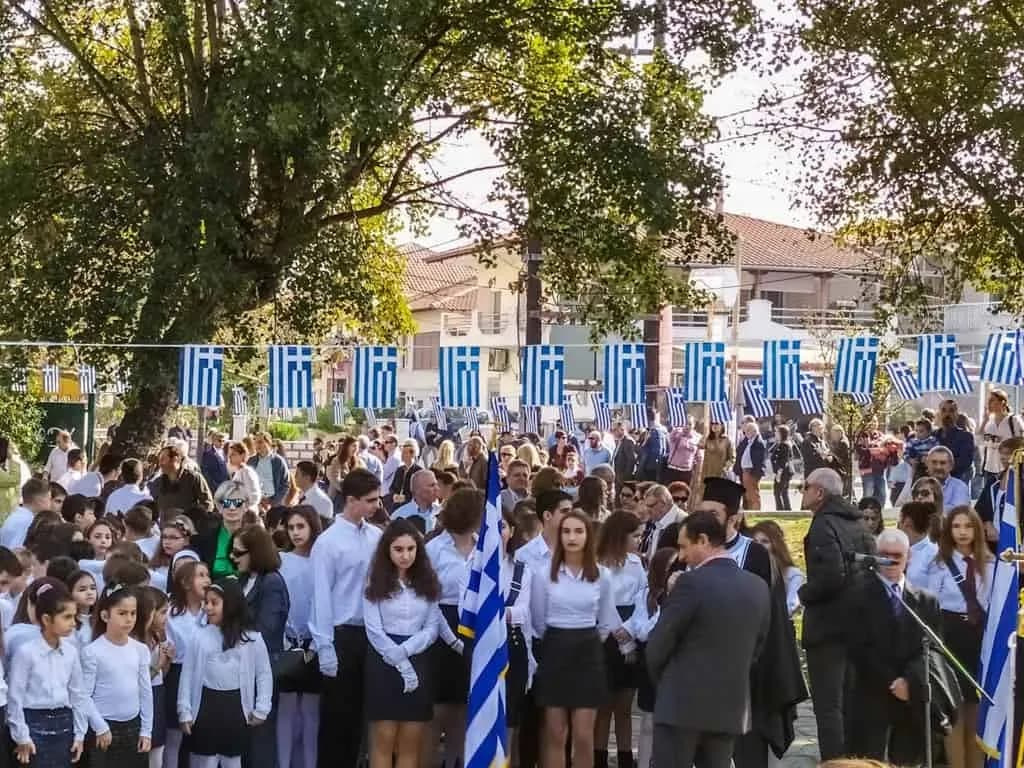
The student parades are particularly touching. Schoolchildren of all ages, from tiny kindergarteners to high school seniors, march through the main streets of their town or neighborhood in organized processions. They dress in their school uniforms -- dark blue trousers or skirts with crisp white shirts -- and march in formation to the accompaniment of military music, often played by school bands or broadcast over loudspeakers. Many schools also present cultural programs in the days leading up to October 28, where pupils recite patriotic poems, sing wartime songs, and perform short theatrical pieces dramatizing scenes from the Greco-Italian War.7
One of the most honored traditions in Greek school life is the selection of the flag bearer, or simeoforos. Traditionally, the student with the highest academic grades in each school is given the immense honor of carrying the Greek flag at the head of the procession. I have seen the pride on the faces of these young flag bearers, walking tall with the blue and white banner held high, their families beaming from the sidelines. It is one of those moments that makes you understand how deeply Greeks connect academic excellence with national service and civic duty.
Behind the flag bearer, students march in neat rows, followed by their teachers. Community groups also participate, with members of cultural associations wearing traditional regional costumes -- each region of Greece has its own distinctive dress -- and performing local music and dances. Elderly veterans and their descendants often take part as well, carrying wreaths that will be laid at local war memorials. The entire community turns out to watch, lining the parade route, waving small Greek flags, and applauding as each group passes by.
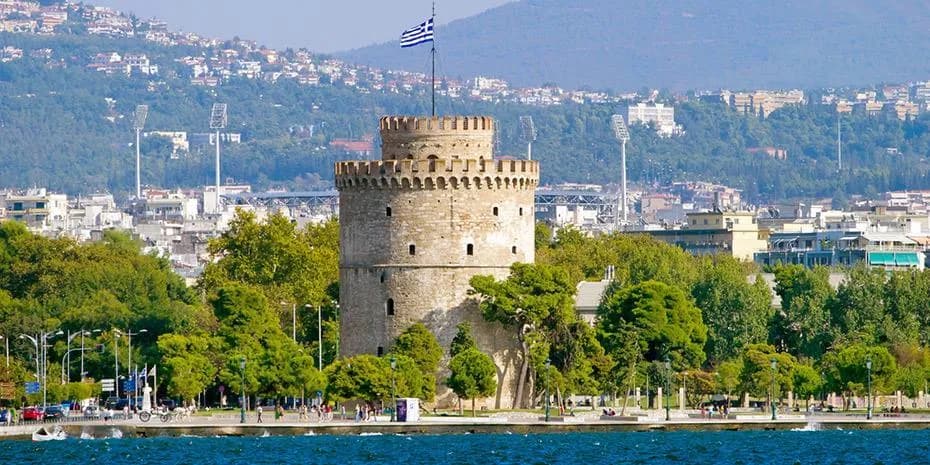
In Athens and Thessaloniki, the celebrations take on a grander scale with major military parades. In Thessaloniki, the largest military parade in the country takes place along the waterfront promenade, featuring contingents from all branches of the Greek armed forces -- army, navy, and air force -- along with military vehicles and flyovers by the Hellenic Air Force. The parade in Athens, centered along avenues near Syntagma Square and the Parliament building, is similarly impressive. Government officials, military leaders, and foreign diplomats attend, and the events are broadcast live on national television.
Churches across the country hold special services on the morning of October 28. The Greek Orthodox Church plays an important role in commemorating the day, with prayers offered for those who fought and fell in defense of the nation. Many families attend morning liturgy before heading out to watch the parades.
Because Oxi Day is a national holiday, all schools and government offices are closed. Most private businesses close as well, though some restaurants and cafes in tourist areas may remain open. Schools typically have the eve of October 28 off as well, giving students time to prepare for the celebrations. The overall atmosphere is one of quiet pride interwoven with festivity -- not the boisterous celebration of a summer panigiri, but something more solemn, more reflective, and profoundly communal.
Experiencing Oxi Day as a Visitor
If you happen to be visiting Greece in October, experiencing Oxi Day firsthand is something I wholeheartedly recommend. It offers an insight into Greek culture and national identity that you simply cannot get from visiting ancient ruins or lounging on a beach, as wonderful as those experiences are. Greece in October is beautiful in its own right -- the summer crowds have thinned, the temperatures are pleasantly mild, and the autumn light gives the landscape a warm, golden quality that is absolutely enchanting.
For the full experience, you have two main options: witnessing the grand military parades in a major city, or soaking in the intimate, community-centered celebrations of a smaller town or village. Both are wonderful, but they offer very different experiences.
In Athens, the military parade along the main avenues is impressive and stirring. You will want to find a spot along the parade route early, as crowds gather well in advance. The sight of Greek military units marching in precise formation, accompanied by the sound of military bands, is genuinely moving. The student parades in various Athens neighborhoods happen separately and are equally worth seeking out for their warmth and community spirit.
Thessaloniki offers what many consider the most spectacular Oxi Day experience in the country. The city's waterfront parade is the largest military procession in Greece, and the atmosphere along the promenade is electric. Thessaloniki has a particular connection to the history of the era, and the city takes its celebrations very seriously.
However, I often tell my guests that the most memorable Oxi Day experiences are found in smaller towns and villages. In a small Greek town, the celebration feels intensely personal. Everyone knows the students marching in the parade. The flag bearer is someone's grandchild, someone's neighbor. The veterans being honored are the grandfathers and great-grandfathers of the people standing beside you. The entire community gathers in the central plateia, and afterward, families head to tavernas for long celebratory meals together.
I remember one Oxi Day spent in a small town in the Peloponnese where the parade consisted of perhaps sixty schoolchildren, a handful of veterans in their medals, and the local priest leading the procession. The entire village watched from the sidewalks of the main road. Afterward, everyone gathered in the square for coffee and pastries, and the taverna next to the church served a special meal. A visitor I had brought along told me afterward that it was one of the most meaningful cultural experiences of their entire trip to Greece.
A few practical notes for visitors: because most businesses close on October 28, plan accordingly. Stock up on any essentials the day before. Restaurants in tourist areas may remain open, but do not count on it, especially outside Athens and Thessaloniki. Public transportation usually runs on a reduced holiday schedule. If you want to photograph the parades, arrive early and be respectful -- this is a solemn national commemoration, not a street festival. A nod of respect or a quiet "chronia polla" (meaning "many happy returns," the standard Greek greeting on holidays) will be warmly received.
The Significance of Oxi Day in Modern Greece
For Greeks, Oxi Day is about far more than a single historical event. It has become a touchstone for national identity, a living symbol of what it means to be Greek. The word "Oxi" itself has transcended its wartime origins to represent a broader set of values: courage in the face of tyranny, unity in times of crisis, and the refusal to surrender one's principles regardless of the consequences.
Living here, I have seen how Oxi Day resonates with Greeks across all generations and political persuasions. In a country where political debate can be intense and divisions sharp, Oxi Day is one of the rare occasions when the entire nation comes together around a shared sense of pride and purpose. Young people, who may have complicated feelings about other aspects of Greek politics and history, embrace Oxi Day with genuine enthusiasm.
The day also carries deeply personal significance for many families. Nearly every Greek family has stories passed down from the war years -- of grandfathers who fought in the mountains of Epirus, of grandmothers who endured the famine of the occupation, of resistance fighters who risked everything to keep the spirit of "Oxi" alive under enemy rule. When a Greek child marches in the school parade, they are often carrying with them the memory of specific ancestors who lived through the events being commemorated.
In the broader context of Greek history, Oxi Day fits into a long narrative of resistance against foreign domination that stretches back millennia. From the ancient Spartans and their allies at Thermopylae to the Greek War of Independence against the Ottoman Empire in the 1820s, the theme of defiant courage against a larger power recurs throughout the Greek national story. Oxi Day is the most recent and perhaps most emotionally immediate chapter in that ongoing narrative.
Planning Your Visit Around Greek National Holidays
If the idea of experiencing Oxi Day Greece celebrations appeals to you, October is truly one of the best months to visit. The scorching summer heat has subsided, giving way to pleasantly warm days -- typically in the low to mid-twenties Celsius -- and cool, refreshing evenings. The Aegean Sea is still warm enough for swimming in many places, the archaeological sites are far less crowded than in peak season, and the autumn colors across mainland Greece, particularly in regions like Epirus, Pelion, and the Peloponnese, are simply beautiful. Visiting Greece in autumn means encountering the country at its most authentic and unhurried.
The tourist infrastructure is still fully operational in October, but the atmosphere is decidedly more local. Tavernas that spent the summer catering primarily to international visitors return to their regular menus and rhythms. Villages that were overrun in August are peaceful and welcoming. Hotel rates drop to shoulder-season prices. It is the Greece that I fell in love with when I first arrived here more than three decades ago.
Oxi Day on October 28 makes an excellent anchor for an autumn itinerary. You might spend a few days in Athens exploring the city before heading to the Peloponnese, timing your arrival in a smaller town to coincide with the October 28 celebrations. Or you could base yourself in Thessaloniki for the grand military parade and then explore the villages of Halkidiki, the monasteries of Meteora, or the dramatic landscapes of Zagori in the days that follow. Crete remains warm and inviting well into November, and combining Oxi Day on the island with visits to Minoan palaces, mountain villages, and stunning gorges makes for an unforgettable trip.
Greece's other major national holiday, March 25 -- Greek Independence Day -- offers a similar experience of parades and patriotic celebration, this time commemorating the start of the Greek War of Independence against the Ottoman Empire in 1821. March 25 also coincides with the Feast of the Annunciation, one of the most important religious holidays in the Greek Orthodox calendar. The traditional meal on March 25 is bakaliaros (salt cod) with skordalia (garlic dip), a custom tied to the Lenten fasting period.
As a travel concierge who has spent decades helping visitors discover the real Greece, I always encourage my guests to plan their trips around these cultural moments whenever possible. Visiting an ancient temple or a stunning beach is wonderful, and Greece has no shortage of either. But witnessing a nation come together to honor its history and values offers a connection to this country that goes far deeper than any sightseeing itinerary. It transforms a holiday into something genuinely meaningful -- a memory rooted not just in beautiful scenery, but in the living heart of a culture.
Oxi Day is one of those rare experiences that stays with you. It is the sound of schoolchildren's shoes on pavement, the sight of the blue and white flag catching the October breeze, the tears in an elderly woman's eyes as she remembers her father's stories from the Albanian front, and the quiet pride of an entire nation that once looked overwhelming force in the eye and said, simply and firmly: No. If you have the chance to be in Greece on October 28, take it. You will carry the memory with you long after you have returned home.
References
- Ohi Day - History and Significance — Wikipedia
- The Greco-Italian War 1940-1941 — Wikipedia
- Ioannis Metaxas and the Italian Ultimatum — Encyclopaedia Britannica
- Greece and the Second World War — United States Holocaust Memorial Museum
- OXI: How Greece Delayed the German Attack on Russia — Greek Reporter
- Churchill's Tribute to Greece — Imperial War Museums
- Greek National Holiday of October 28th - Traditions and Celebrations — Omilo Greek Language and Culture