At the tip of the Mani Peninsula, where the Taygetos Mountains finally surrender to the sea at Cape Tainaron, ancient Greeks believed they had found an entrance to the underworld. Hercules descended here to capture Cerberus; Orpheus entered seeking Eurydice. Standing at this windswept point, where the land falls away to dark waters and Africa lies somewhere beyond the horizon, you understand why the ancients placed their gate to Hades here. The Mani feels like the end of the world—and in many ways, it is.1
A Region Unlike Any Other
The Mani comprises the central peninsula of the southern Peloponnese, dominated by the Taygetos range and largely isolated from the rest of Greece until recent decades. This isolation preserved a culture found nowhere else: fierce independence, blood feuds lasting generations, architecture built for defense, and customs that survived unchanged while the rest of Greece modernized.2
The region divides into two distinct areas. The Outer Mani (Exo Mani), from Kalamata south to Areopoli, features more vegetation, better roads, and increasingly developed beaches. The Inner Mani (Mesa Mani), from Areopoli to Cape Tainaron, remains starkly beautiful and largely empty—stone villages, many abandoned, scattered across a landscape of rocky hills and dramatic coastline.
The Maniots, as the peninsula's inhabitants are called, never fully submitted to any conqueror. The Romans bypassed the region; the Byzantines treated it warily; the Ottomans, after initial attempts at control, largely left the Maniots to their blood feuds and tower houses. This independence came at a cost—the vendettas that shaped Maniot society claimed countless lives over centuries—but also preserved a culture of remarkable resilience.
The Tower Houses: Architecture of Conflict
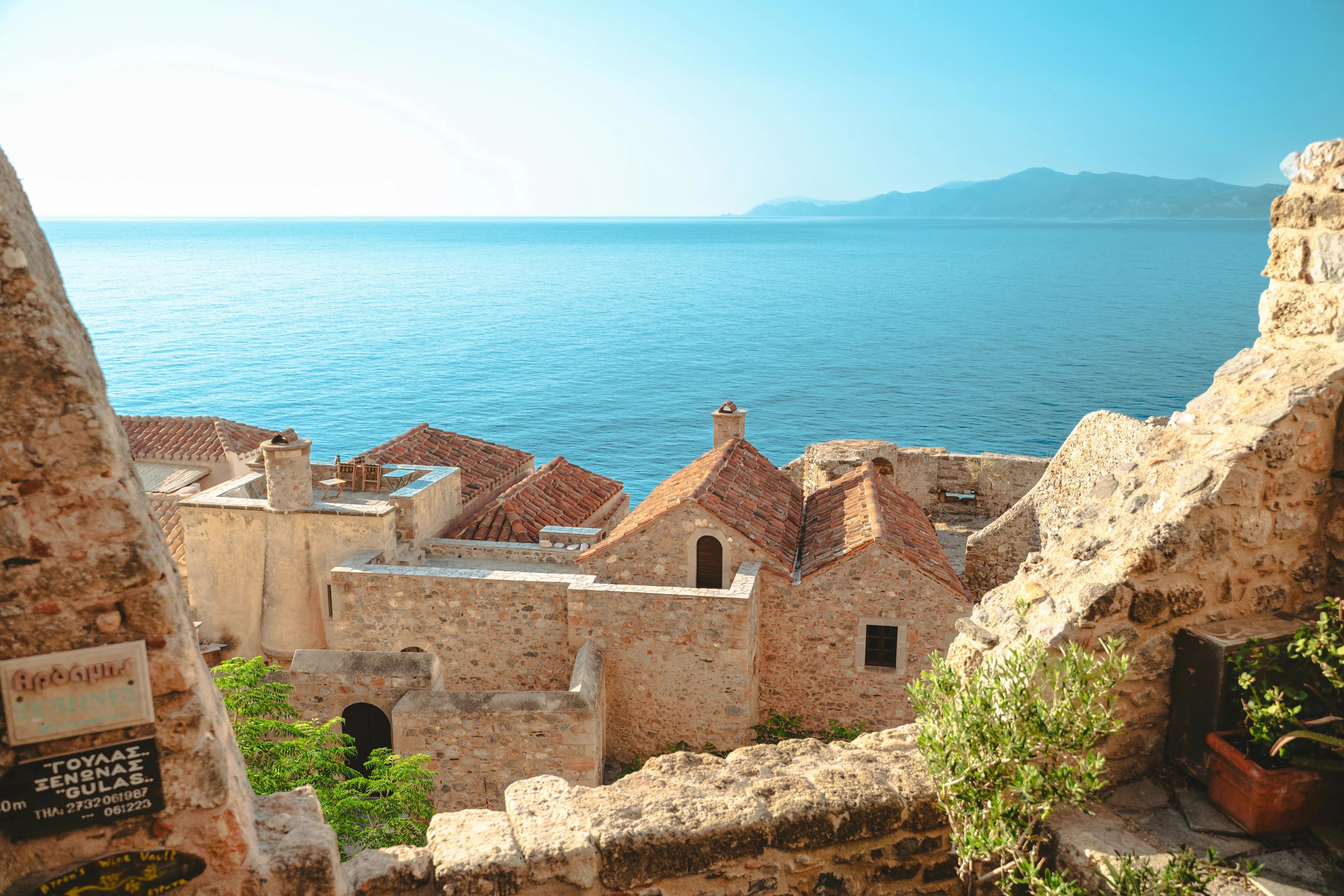
Nothing defines Mani's landscape like its tower houses. These stone structures, some reaching five or six stories, were built not for display but for survival. The tower house evolved as a response to the blood feuds that dominated Maniot society—conflicts between families that could last decades and claim dozens of lives.3
A Maniot tower served as fortress and home. The ground floor, windowless and entered only by ladder, stored weapons and supplies. Upper floors contained living quarters, their narrow windows designed for defense rather than light. The roof provided a platform for offensive and defensive operations. When feuds erupted, entire families might spend months besieged in their towers.
The villages of Vatheia, Kita, and Flomochori preserve remarkable concentrations of these towers. Vatheia, dramatically situated on a ridge overlooking the sea, has become the most photographed Mani village—its dozens of towers, many ruined but some restored, creating a skyline unlike anywhere else in Greece. The village's near-abandonment following the feuds and subsequent emigration adds to its haunting atmosphere.
Some towers have been converted to guesthouses, offering visitors the unique experience of sleeping within walls built for battle. The thick stone maintains cool temperatures in summer; the narrow windows frame views that have changed little in centuries. These accommodations provide the most atmospheric lodging in the Mani.
The Diros Caves: Underground Wonder
The Diros Caves, near the village of Pyrgos Dirou, constitute one of Greece's most impressive natural attractions and one of Europe's most extensive underground lake systems. The caves extend for kilometers, though only a portion is open to visitors, who explore by guided boat through vast chambers decorated with stalactites and stalagmites reflected in still waters.4
The experience is genuinely otherworldly. Small boats carry visitors through narrow passages into enormous caverns, the boatman's pole the only sound besides dripping water. The formations, developed over millions of years, assume fantastic shapes—organ pipes, curtains, columns rising from the lake. The water's clarity makes depths difficult to judge; the boat seems to float in space.
Beyond their natural beauty, the caves hold archaeological significance. Excavations have revealed evidence of human habitation dating back to the Neolithic period, including bones, tools, and pottery. The adjacent museum displays these finds, though the caves themselves remain the primary attraction.
Visit early in the day, before tour groups arrive, for the most contemplative experience. The caves maintain a constant temperature regardless of season—bring a layer even in summer. Photography is limited but not prohibited; the challenge lies in capturing the scale and atmosphere.
Byzantine Churches: Hidden Treasures
Scattered across the Mani landscape, often in seemingly random locations, dozens of Byzantine churches preserve frescoes dating from the 9th to 14th centuries. These small structures, many no larger than a modest room, contain some of the most important Byzantine art outside Mystras and Constantinople.5
The churches' survival owes to the Mani's isolation. While other regions saw their religious art destroyed or whitewashed during Ottoman rule or damaged by earthquakes, the Mani's churches often remained untouched, their frescoes fading but intact. The 20th century brought recognition and restoration, though many churches remain locked against theft—keys are often available from nearby villagers.
The Church of Agios Nikolaos at Kampos, the Church of the Taxiarches at Charouda, the Church of Agios Georgios at Kita—these and dozens more merit seeking out. The frescoes vary in sophistication, from provincial works of local craftsmen to pieces by accomplished artists. All share the characteristic Byzantine style: large eyes, stylized figures, backgrounds of deep blue and gold.
Finding these churches requires patience and often luck. Some are well-signed; others hide behind olive groves or down unmarked tracks. The search becomes part of the experience—rounding a corner to discover a tiny church surrounded by ancient olives, its weathered walls giving no hint of the treasures within.
Cape Tainaron: Land's End
The road south from Areopoli eventually reaches Kokkinogia, beyond which only a footpath continues to Cape Tainaron, the Greek mainland's southernmost point. The walk takes perhaps thirty minutes, crossing scrubby hillside to reach the lighthouse marking the cape. Here, where the Aegean and Ionian Seas meet, the sense of arrival at the end of something profound is inescapable.6
The ancients considered this entrance to Hades with good reason. The landscape is stark, the sea often violent, the wind constant. A ruined temple to Poseidon marks the spot where pilgrims once came to consult an oracle of the dead. The cave entrance that supposedly led to the underworld has been variously identified but never confirmed.
Modern visitors come for the views and the achievement of reaching this ultimate point. On clear days, the horizon seems impossibly distant; the knowledge that nothing lies between you and North Africa adds to the sensation of remoteness. The walk back, with the Taygetos Mountains ahead, feels like returning to the world of the living.
The Coastline: Beaches and Boat Trips
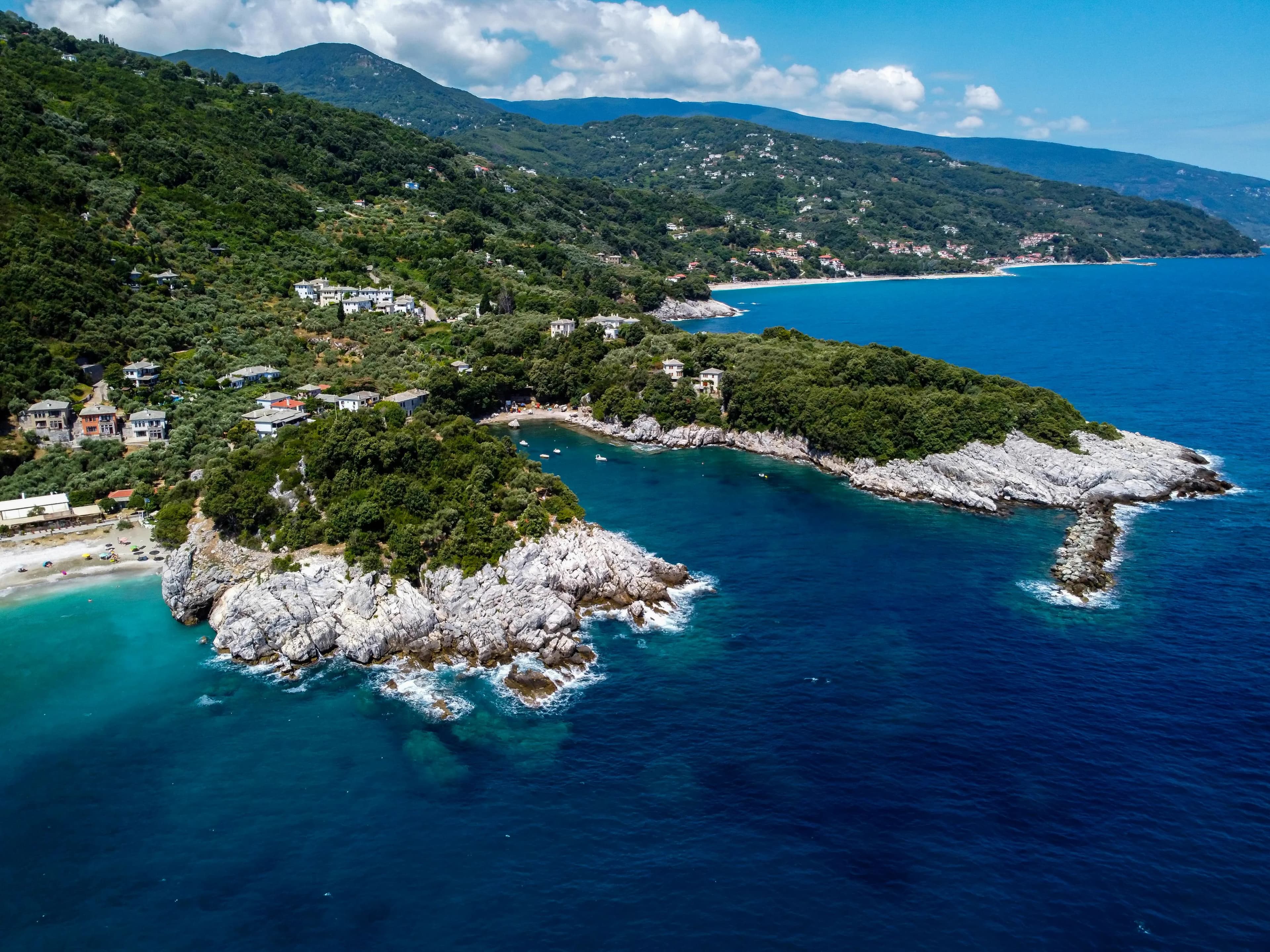
The Mani's coastline, while not offering the sandy beaches found elsewhere in Greece, provides dramatic scenery and several worthy swimming spots. The coast alternates between rocky cliffs, pebble coves, and occasional stretches of sand, most accessible only by boat or foot.7
Gerolimenas, a small fishing village at the Mani's western edge, serves as a base for boat trips along the coast. These excursions visit sea caves, hidden beaches, and viewpoints impossible to reach by land. The coastline's vertical cliffs, plunging directly to deep water, create a dramatic seascape unlike the gentle shores of the islands.
For beach swimming, the Outer Mani offers better options. Stoupa, developed around two sandy bays, has become the region's most popular beach destination—writer Nikos Kazantzakis lived here while writing "Zorba the Greek." Kardamyli, slightly north, combines excellent beaches with an atmospheric old town. Both settlements offer accommodation and dining that the Inner Mani largely lacks.
Areopoli: Gateway to the Deep Mani
Areopoli, the largest town in the Mani (though still quite small), serves as the practical and historical gateway to the Inner Mani. The town's name honors Ares, god of war—appropriate for this region shaped by conflict. The main square, with its memorial to the Maniot heroes who sparked the Greek War of Independence, provides a fitting introduction to regional character.8
The town itself merits exploration. Tower houses converted to hotels and restaurants line the main street. The churches of Taxiarches and Agios Ioannis contain notable frescoes. The narrow back streets reveal traditional architecture largely unchanged despite increasing tourism. Areopoli offers the Mani's best dining and accommodation options, making it an ideal base for exploring the region.
On Saturday mornings, a market fills the main square with vendors selling local produce, cheese, and honey. The scene provides a glimpse of Maniot daily life persisting beneath the surface of tourist infrastructure. Locals still greet each other with traditional formality; the pace remains unhurried despite visitor numbers.
Driving the Mani
Exploring the Mani requires a car and a tolerance for challenging roads. The main routes have been improved but remain winding and narrow in places. The side roads leading to villages and churches often deteriorate to rough tracks. The rewards—arriving at a tower village or hidden church accessible only by these roads—justify the effort.9
The circuit around the Inner Mani, from Areopoli down the east coast to Cape Tainaron and back up the west coast, takes a full day if you stop frequently. The temptation to rush through should be resisted; the landscape reveals itself slowly, each turn bringing a new perspective on the stark beauty.
Several points merit extended stops. Vatheia, despite its tourist fame, deserves an hour's wandering among the towers. Gerolimenas offers good lunch options and the chance to arrange a boat trip. The stretch between Alika and Marmari passes some of the most dramatic coastline. Cape Tainaron, of course, requires time for the walk and contemplation.
Seasons and Weather
The Mani's climate differs from both the northern Peloponnese and the islands. Summer heat is intense—the barren landscape offers little shade—but winters remain mild. Spring brings wildflowers to the hillsides; autumn offers comfortable temperatures for exploration. Avoid July and August unless you tolerate extreme heat well.10
Wind shapes Mani life year-round. The meltemi blows strongly in summer, welcome for cooling but challenging for swimming on exposed coasts. Winter storms can be fierce, the sea dangerous for days at a time. The tower houses, built thick and low to the ground, evolved partly in response to these winds.
The ideal visiting period runs from April to June and September to October. These months offer pleasant temperatures, manageable crowds, and the best conditions for hiking and exploration. The swimming season extends from May through October for most visitors.
The Mani Spirit
What remains of Maniot culture beyond the architecture? The blood feuds ended definitively only in the mid-20th century; memory of them persists among older residents. The independence that sparked the Greek revolution lives on in regional pride. The hospitality, extended as obligation rather than calculation, reflects ancient custom.
The Mani attracts a particular kind of traveler—those seeking something beyond beaches and ruins, willing to tolerate limited infrastructure for the reward of authentic character. Mass tourism has not yet transformed the region, though change is visible in the more accessible areas. The Inner Mani remains largely as it has been for centuries: stone villages, empty roads, a landscape hostile to comfort but rich in austere beauty.
Standing among the towers of Vatheia, exploring a Byzantine church hidden in an olive grove, walking the path to Cape Tainaron—these experiences connect visitors with a Greece far removed from tourist brochure images. The Mani offers no easy pleasures, but for those who appreciate its stark magnificence, no region of Greece rewards more profoundly. The entrance to Hades may be myth, but the sense of having reached somewhere ultimate and irreducible is entirely real.
References
- Cape Tainaron and the Entrance to Hades — Theoi Greek Mythology
- The Mani: History and Culture — Britannica
- Maniot Tower Houses — Discover Greece
- Diros Caves — Visit Greece
- Byzantine Churches of Mani — UNESCO Tentative List
- Cape Tainaron: Mainland's End — Greeka
- Mani Coastline and Beaches — Lonely Planet
- Areopoli: Gateway to Inner Mani — Mani Guide
- Driving Routes in Mani — Driving Directions Greece
- Climate and Weather in Mani — Climates to Travel