I've greeted a lot of first-time visitors to Greece over the years, and I've also fielded the follow-up calls afterward, the ones where people tell me what they wish they'd known beforehand. The good news is that Greece is remarkably forgiving of mistakes; you'll have a wonderful time almost regardless. But there is a real difference between a wonderful time and the trip you actually imagined when you started planning. These are the twelve mistakes I see most often, and they are almost all avoidable with a little foresight.
1. Overpacking the Itinerary
The single most common mistake, by a wide margin, is trying to see too much. I get itineraries from prospective clients that read like a greatest-hits tour: Athens, Santorini, Mykonos, Crete, Meteora, and Nafplio, all in nine days. Every one of those places deserves more than a night, and the transit time between them, whether by ferry or car, eats hours that people never budget for.
The fix is almost always to choose fewer places and stay longer in each. Two or three regions in ten days, with at least three nights per stop, lets you actually settle into a place rather than perpetually repacking. I would rather send a client home wishing they'd had one more day in Nafplio than one more destination checked off a list they'll barely remember.
There's a rule of thumb I share with almost every first-time client: count your one-night stops and treat each one as a small tax on the trip. A single night anywhere means an arrival, an orientation, and a departure, with almost no time actually spent enjoying the place in between. Two of those in a row and you've spent an entire day of your trip essentially in transit, checking in and out of rooms you barely saw.
2. Treating Athens as a Layover
Because Athens is the arrival point for most itineraries, people plan to "get through it" on the way to the islands, sometimes allotting a single night before rushing to the port. This does the city, and the traveler, a disservice. Athens rewards two or three full days: the Acropolis and its museum, yes, but also the neighborhoods, the food, and the layered history that the islands simply don't offer in the same way.
Visitors who skip Athens often tell me afterward that it was the trip's biggest surprise in hindsight, a city they'd dismissed as a formality that ended up being one of the highlights. Give it the days it deserves before you head to the water.
I wrote at length about the neighborhoods beyond the Acropolis that reward this extra time, and I'd rather point people there than repeat myself here. The short version: Athens is not a single monument with a city attached. It's a genuine, layered capital, and treating it as a one-night formality is like visiting New York and only seeing the airport.
3. Santorini Tunnel Vision
Santorini is beautiful, and I understand exactly why it dominates every Greece Pinterest board. But I regularly meet people who have planned an entire trip around it without realizing that Greece has dozens of islands with their own distinct character, often with a fraction of the crowds and a fraction of the price. Naxos, Paros, Milos, and the Ionian islands each offer experiences that many visitors end up preferring once they've seen them.
Santorini earns its reputation for the caldera views and the sunsets, and I still send plenty of clients there. But it works best as one stop in a broader itinerary, not the sole justification for the whole trip.
4. Renting a Car on Islands That Don't Need One
On some islands, a car is essential; on others, it's an expensive source of stress. Mykonos and Santorini both have narrow village lanes never designed for vehicle traffic, limited and often confusing parking, and reliable local buses and taxis for the distances involved. I've seen visitors spend an afternoon circling for parking in Fira that they could have spent at the beach.
Save the rental car for islands like Crete, where the distances are real and the interior villages are worth reaching independently, or for mainland regions like the Peloponnese. Match the car to the geography, not the habit of renting one by default.
The decision isn't only about parking headaches, either. Rental insurance excess in Greece can be substantial, and I've fielded more than one panicked call about a scraped bumper on a narrow switchback road that a local bus driver would have navigated without a second thought. Ask what a car actually buys you on a given island before assuming you need one.
5. Visiting in August Without Booking Ahead
August is when most of Europe takes its holiday, and Greeks themselves travel domestically in huge numbers during this month, particularly around the August 15th holiday. Popular hotels, ferries, and restaurants book out weeks in advance, and last-minute travelers are often left with the leftovers, at premium prices.
If August is your only option, book everything, hotels, ferries, and any restaurant you particularly want, as early as you possibly can. If your dates are flexible at all, moving even two or three weeks in either direction changes the experience enormously.
6. Ignoring Shoulder Season
Related to the point above: many first-time visitors assume summer is simply when you go to Greece, without realizing that May, June, and September offer better weather for walking and touring, thinner crowds at every major site, and noticeably lower prices, all while the sea is still perfectly warm for swimming from June onward. The Aegean summer heat in July and August can genuinely limit how much sightseeing you want to do during midday hours.
I steer a large share of my clients toward late May, June, or September for exactly this reason, and very few of them regret it.
7. Getting Caught Out by Museum Hours and the Afternoon Lull
Archaeological sites and museums in Greece keep hours that shift by season and sometimes close entirely on certain weekdays, and this catches visitors off guard constantly. Layer onto that the fact that many shops in smaller towns and villages close for a few hours in the early afternoon, reopening later in the day, and you have a recipe for a frustrated afternoon if you haven't checked ahead.
Build your day around this rhythm rather than fighting it: mornings for sites and museums, a long unhurried lunch and rest during the early afternoon lull, and a second wind for exploring, shopping, or a swim as the day cools.
8. Tipping Confusion
Tipping in Greece is real but far more modest than American visitors often expect. Rounding up the bill or leaving five to ten percent at a taverna is generous and appreciated; there's no need to calculate twenty percent as a baseline the way you might at home. I've watched guests over-tip out of anxiety about getting it wrong, and I've also seen the opposite, visitors who tip nothing because they assume, incorrectly, that service is always included.
A simple rule: round up for coffee and casual meals, leave a bit more for a meal where the service was genuinely attentive, and don't stress over precision. Nobody is tracking a percentage.
9. Assuming Every Taverna Takes Cards
Card acceptance has improved enormously in Greece over the past decade, but plenty of small tavernas, particularly in villages and on smaller islands, still operate cash-only or have card machines that mysteriously stop working at the least convenient moment. I always tell clients to carry more cash than they think they'll need, especially outside the main tourist centers, and to treat a working card machine as a pleasant surprise rather than an assumption.
This catches people especially off guard on smaller islands, where the nearest ATM might be a walk across town, or where a machine has simply run out of cash on a busy weekend. Withdraw more than a single dinner's worth when you find a working ATM, rather than assuming there will be another one around the next corner.
10. Dressing Wrong for Monasteries and Churches
Greece's religious sites, from village churches to the great monasteries of Meteora, maintain real dress codes: shoulders and knees covered for everyone, and women may be asked to wear a skirt rather than trousers, though most sites keep wraps at the entrance for anyone caught out. I've seen visitors turned away at a monastery door in shorts and a tank top, losing the better part of an afternoon they'd planned around the visit.
Pack accordingly if a monastery or church visit is on your itinerary, a light scarf or wrap takes almost no space in a bag, and you'll never be caught scrambling at the entrance.
11. Skipping the Mainland Entirely
Because Greece's marketing imagery is almost entirely islands, first-time visitors often don't realize how much the mainland offers: the Peloponnese, Delphi, Meteora, the mountain villages of Epirus. I regularly build itineraries that include a few days around Delphi, and the reaction is consistently one of surprise at how much history and landscape exists just a few hours from Athens by car.
If your image of Greece is entirely whitewashed cliffside villages, a mainland detour will genuinely change your sense of the country, and it's often easier logistically than adding another island.
12. Ferry-Schedule Optimism
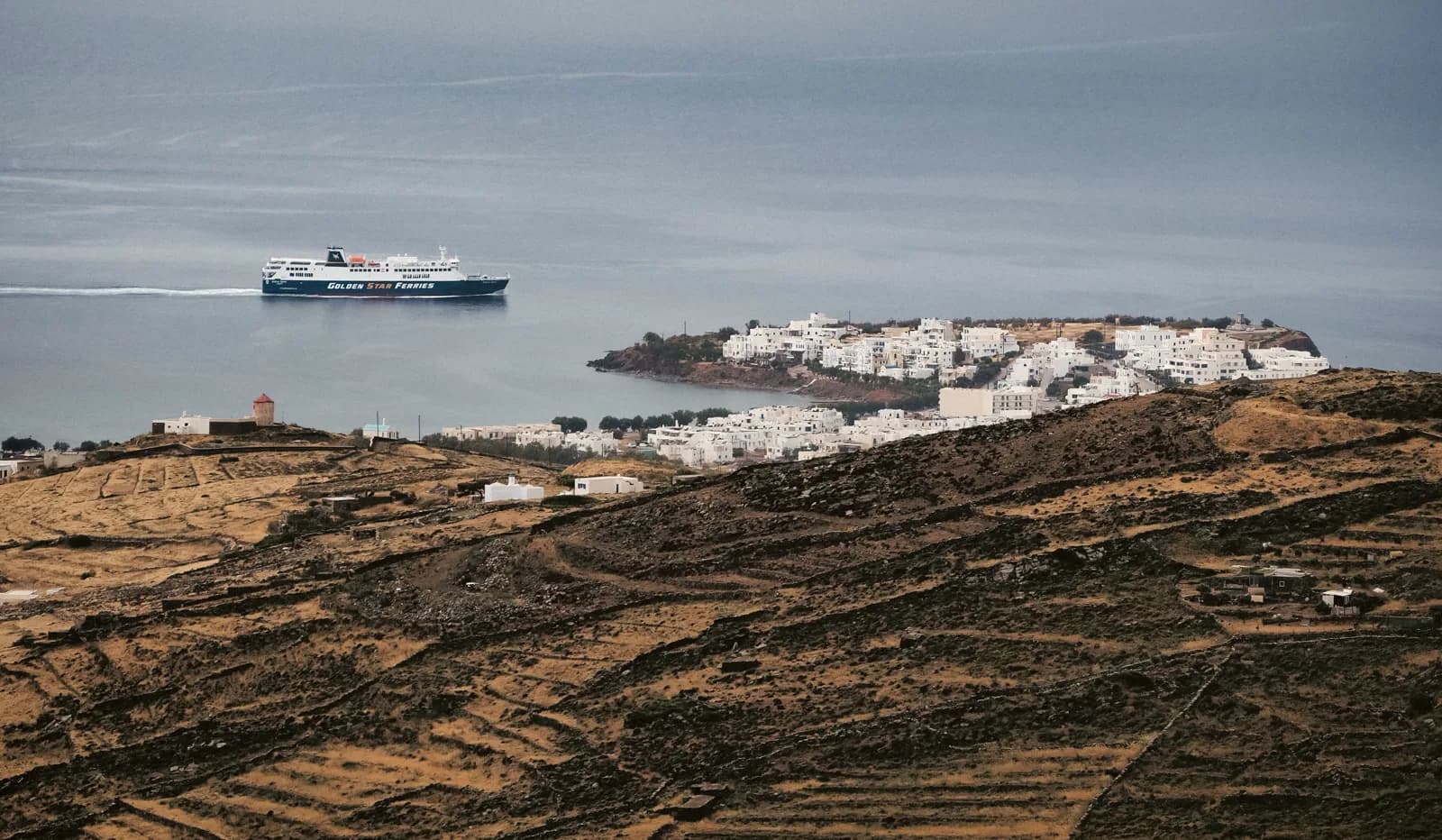
This is the mistake with the highest cost when it goes wrong. First-time visitors often build tight island-hopping connections, a ferry arriving at 2pm and a flight out at 6pm the same day, without accounting for the fact that Greek ferries, particularly the smaller conventional boats, run on schedules that can shift with wind, mechanical issues, or simple Greek unpredictability. High winds in the Aegean, especially the summer meltemi, cancel or delay sailings with little notice.1
Build in a buffer day whenever a ferry connects directly to an international flight home, and check current conditions and schedules before finalizing tight connections.2
I've rescued more than one trip from this exact scenario, moving a client onto an earlier boat the moment weather reports turned unfavorable rather than waiting to see what happened. It's the single mistake on this list where the consequences, a missed international flight, can genuinely overshadow the rest of an otherwise perfect trip, so it deserves more caution than instinct usually provides.
The Good News
None of these mistakes are fatal, and I want to be clear about that. Greece is a country that tends to reward even under-planned visits with genuine warmth and unexpected moments. But the difference between a good trip and a great one is almost always in these small, avoidable decisions made weeks before departure, not in anything that happens once you've landed.
If you'd rather not learn any of these lessons the hard way, that's exactly the gap that custom trip planning closes. Feel free to get in touch, and we can build an itinerary that sidesteps every item on this list before you ever board a plane.
References
- Plan Your Trip to Greece — Visit Greece
- Ferry Schedules and Sailing Conditions — Ferryhopper
- Archaeological Sites and Museums — Hellenic Ministry of Culture