Parents ask me some version of the same worried question in nearly every planning call: "Is Greece actually manageable with kids, or are we going to spend the whole trip managing meltdowns instead of enjoying it?" After three decades of raising a family here and planning trips for other families since, my answer is always the same: Greece is one of the easiest countries in the world to travel with children, precisely because Greek culture doesn't treat children as something to be managed around. It treats them as something to be included.
Why Greece Is Genuinely Easy With Children
The thing that surprises visiting parents most is how welcome children are, everywhere, without exception. There's no separate "kids' menu" culture here in the way there is in a lot of countries, because Greek families simply bring their children to the same tables, the same tavernas, the same long lunches as everyone else, and nobody blinks. I've seen toddlers asleep in strollers parked beside a taverna table at ten at night while parents finish their meal unhurried, and I've seen eight-year-olds running between tables in a village square while grandparents keep half an eye on them from a nearby bench. This isn't a special allowance made for tourists; it's simply how Greek family life works, and it means visiting families get folded into that same easy acceptance rather than treated as an inconvenience.1
Practically, this translates into real advantages for you. Restaurants won't rush you out. Staff will often go out of their way to entertain a fussy toddler. Locals will strike up conversations with your kids in the street. And you'll rarely feel the low-grade tension some countries create around bringing children into "adult" spaces, because in Greece those spaces were never really adult-only to begin with.
This extends to logistics too. Highchairs appear without being asked for in most tavernas. Waitstaff will happily split an adult portion between two small plates without a fuss. And I've never once had a family tell me they felt judged for a child's noise or mess at a Greek table—which, if you've traveled with young kids anywhere else in Europe, you'll know is not something to take for granted.
Late Dinners, Real Kids: How Greek Family Life Actually Works
One adjustment worth making before you arrive: Greek dinner happens late, often not starting until nine o'clock, and Greek children are simply part of that rhythm rather than tucked into bed beforehand. If you try to force an early-bird 6 p.m. dinner schedule on a Greek town, you may find the taverna kitchen barely warmed up and half the tables empty. My advice to visiting families is to lean into the shift rather than fight it: let the kids nap in the afternoon during the hottest hours, the way Greek families do, then let dinner run later and more relaxed than you would at home. Children here are genuinely accustomed to being out late with family, and you'll find the atmosphere far more forgiving of a tired, wriggly kid at a nine o'clock table than you might expect.
Choosing a Base: Nafplio, Crete, and Naxos
Not every corner of Greece suits families equally well, and picking the right base does more for your trip's success than almost anything else. Three places stand out as the bases I build family itineraries around most often.
Nafplio, on the mainland in the Peloponnese, is close to the top of my list for families precisely because it removes the ferry question entirely—you drive in from Athens in under two hours, no boat, no seasickness, no schedule to work around. The old town is compact, pedestrian-friendly, and genuinely charming to walk with kids in tow, and nearby Mycenae and the ancient theater at Epidaurus give older children an accessible, walkable dose of ancient history rather than an exhausting all-day ruin march. I've written more about what makes Nafplio special for any family considering it as a base.
Crete works beautifully for longer family stays because of its sheer range: organized, shallow beaches for younger children on the north coast, mountain villages and gorges for older kids who want an adventure, and a big enough island that you're never trapped by a single ferry schedule if plans change. I go into far more detail on the island's range in this guide to what makes Crete special, and most of what makes it appealing to any traveler—the food, the pace, the welcome—applies doubly to families.
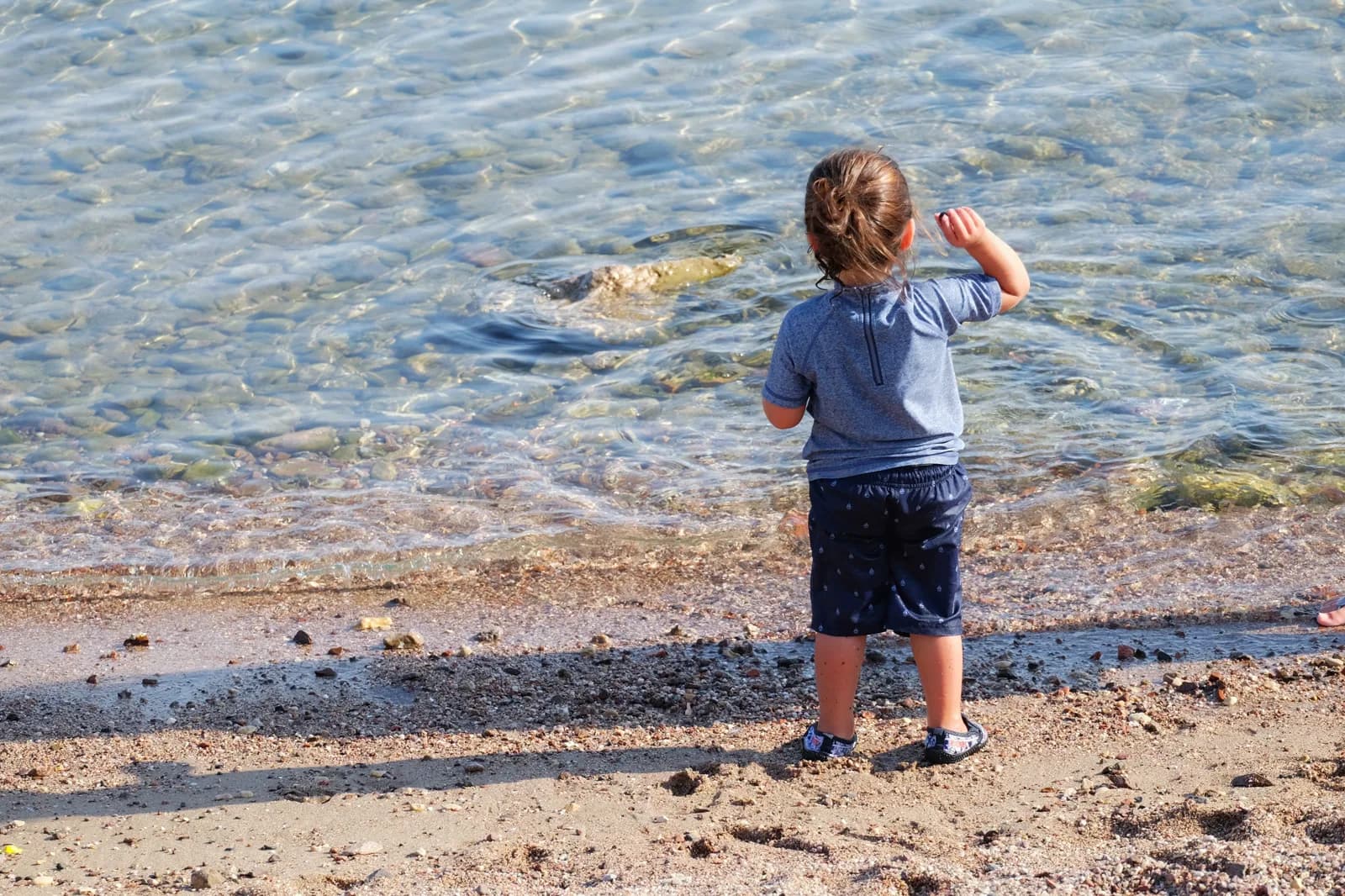
Naxos is my quiet favorite for families wanting a classic Cycladic island experience without Santorini's crowds, cliffside stairs, or price tag. Its beaches slope gently into shallow water for a long stretch, which matters enormously with younger children, and the island produces much of its own food, so meals tend to be simple, fresh, and reliably kid-friendly. It's also large enough that older kids restless after a few beach days can be won over with a mountain village day trip or a visit to the Temple of Demeter, without anyone needing to get back on a ferry.
Toddlers Versus Older Kids: Adjusting the Trip by Age
The right base and pace shift meaningfully depending on your children's ages, and it's worth being honest with yourself about which trip you're actually planning. With toddlers and preschoolers, I lean hard into one base with minimal moving around, shallow calm-water beaches, and short, low-pressure outings rather than any real sightseeing agenda—a slow morning at a village square with a playground nearby often does more for everyone's mood than an ancient site ever will. With school-age children, ancient sites genuinely land, especially framed as stories rather than lectures: kids who've heard the myth of the Minotaur beforehand light up walking through the corridors at Knossos, and the ones who know the story of the Trojan War tend to ask more questions at Mycenae than the adults in the group. Teenagers, meanwhile, often do best with a bit more independence built in—a beach afternoon where they're allowed to wander a village on their own, or a cooking class where they're doing something rather than being led through it.
Pacing Ancient Sites and Beaches So Everyone Actually Enjoys It
The single biggest mistake I see parents make is trying to give their kids the same archaeological itinerary they'd build for themselves. An adult can spend three unhurried hours at Delphi; most children cannot, and forcing it usually ends in tears somewhere around the second hour. My rule with families is to treat ancient sites as a morning activity, not a full day: arrive early before the heat builds, budget ninety minutes to two hours, bring a scavenger-hunt mindset—find the lion, count the columns, spot the tortoise—and then head straight to water. Beach time in the early afternoon, a shaded rest during the hottest hours, and something low-key in the evening works far better than back-to-back sightseeing. Greek sites and beaches are almost always close enough together that this rhythm is easy to build into a day rather than a compromise you have to fight for.
Food Kids Will Actually Eat
Greek food is, happily, one of the easiest cuisines in the world to feed a fussy eater. Souvlaki—grilled meat on a skewer, often wrapped in pita—is close to a universal hit, as is plain grilled chicken or fish available at nearly every taverna. Tzatziki and warm pita bread win over most kids as a starter, and Greek yogurt with honey doubles as a dessert most children genuinely ask for again. Even picky eaters tend to come around to spanakopita once they realize it's essentially a savory pastry, and loukoumades—warm fried dough balls drizzled in honey—function as an ice-cream-truck-level treat that makes any long afternoon of sightseeing feel worth it to a tired six-year-old. I rarely have a family tell me their kids struggled to find things to eat here; if anything, they usually come home eating more adventurously than when they left.
Strollers, Heat, and Ferries: The Practical Stuff
A few practicalities worth knowing before you pack. Old town streets across Greece are frequently cobblestone, and some island villages are stairs-only with no vehicle access at all, so a lightweight, sturdy stroller does far better than a full-size one—or consider a good carrier for the youngest children and simply accept that a stroller may spend some afternoons folded up. Heat is the other real factor: Greek summer sun is intense, and children dehydrate faster than adults realize, so plan around the midday hours the way locals do, with water always at hand and hats non-negotiable.
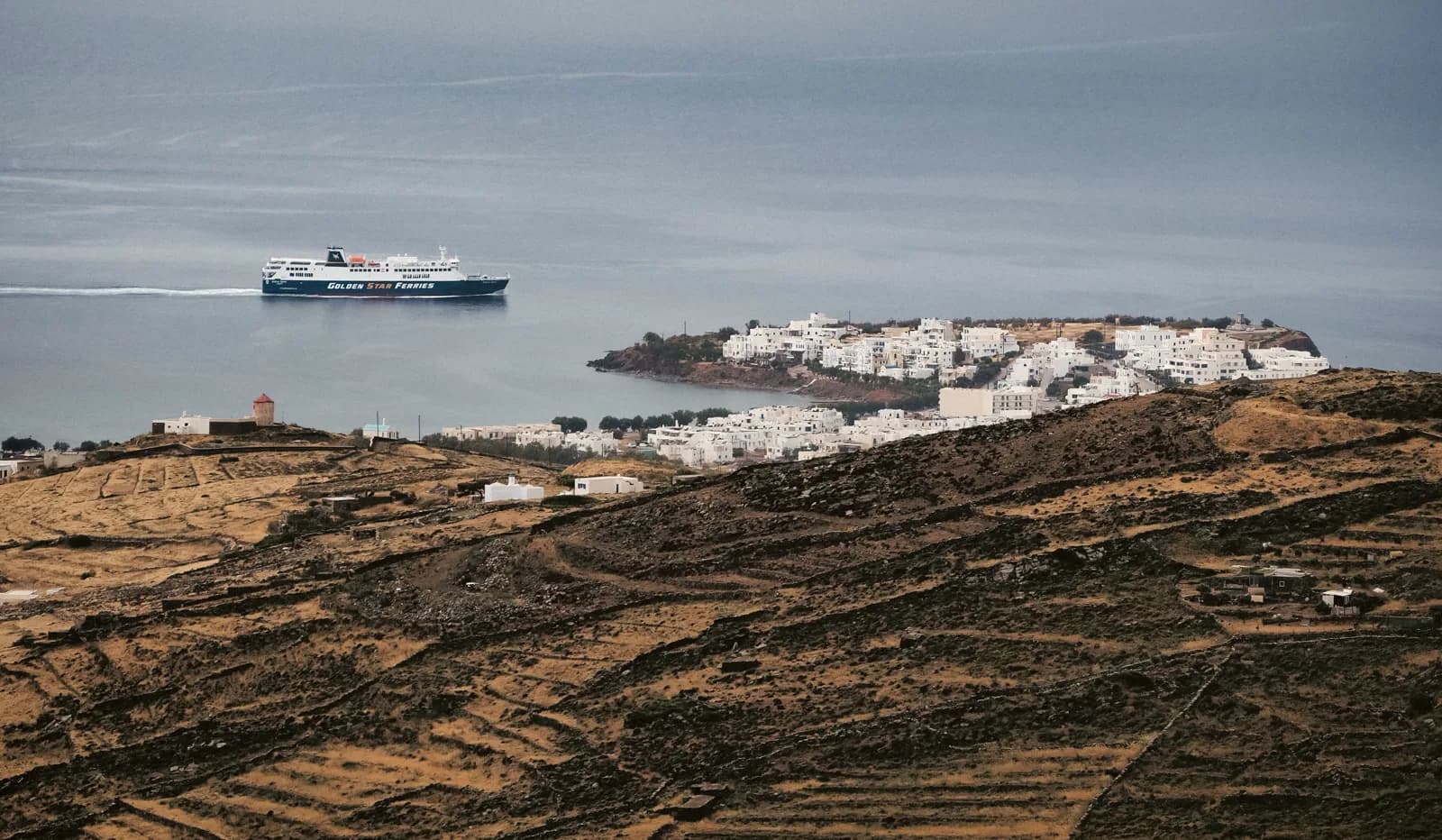
Ferries themselves are generally an easy, even fun, part of a family trip—most routes are calm, kids tend to love the open deck, and larger ferries have enough space to let restless children move around rather than being strapped into a seat.2 The exception is longer crossings in rough meltemi wind conditions in July and August, which can be uncomfortable for anyone prone to seasickness; if that's a concern, I'll generally route a family toward a shorter crossing or a flight instead.
Pharmacies deserve a mention too, since they're one of the quiet reassurances of traveling with kids in Greece. Every town of any size has at least one, clearly marked with a green cross, and Greek pharmacists are generally well-trained and happy to advise on anything from sunburn to a child's upset stomach without needing an appointment. It's a small thing, but it takes real pressure off parents traveling somewhere unfamiliar with young children.
The Trip Your Kids Will Actually Remember
What I've come to believe, after years of building trips for families, is that children don't remember the fourth ancient site of the trip. They remember the taverna owner who brought them a free scoop of ice cream, the afternoon spent floating in a shallow bay, the grandmother who pinched their cheek in a village square and told them they were beautiful in a language they didn't understand. Greece hands you those moments constantly, almost without trying, because this is a culture built around welcoming children rather than tolerating them.
I think about my own children's early years here often when I build these trips—the long summer evenings at a neighbor's table, the way every adult in a village seemed to consider a wandering toddler everyone's responsibility rather than just their parents', the sheer unhurriedness of it all. That's not something you can manufacture with a checklist of sights. It's something that happens when you slow down enough to let Greece do what it does naturally.
Build your itinerary around fewer stops, more time in the water, and meals that run late and easy, and you'll find Greece is far less of a logistical puzzle with kids than most other destinations, and far more of a gift. This is exactly the kind of trip I love building most—one where the pacing, the base, and the day-to-day rhythm are shaped around your family specifically rather than a generic checklist. I offer custom trip planning for families at every age and stage, and I'd love to help you put yours together. Get in touch and let's talk about where your kids will thrive.
References
- Visit Greece: Official Tourism Portal — Greek National Tourism Organisation
- Ferryhopper: Greek Ferry Schedules and Routes — Ferryhopper